
The Specification That Reframes Everything
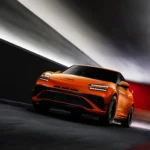
Picture this: a BYD Yangwang U7 — a full-size luxury saloon stretching 5,265mm — arrives at a charging station with ten percent battery remaining. Nine minutes later, the driver gets back in. The battery reads ninety-seven percent. Not eighty percent, which is the figure most European charging marketing stops at. Ninety-seven. If a car using chemistry originally associated with budget city vehicles now charges to near-full in the time it takes to drink a coffee, what exactly does that mean for the assumption that European premium brands own the performance end of the electric car market?
The Vehicle Reality
What Iron-Phosphate Now Does
The chemistry at work here is lithium iron phosphate — LFP, for short — which, until recently, was the battery you chose when you couldn’t afford anything better. Lower energy density than the cobalt-and-nickel formulations inside most European premium EVs meant shorter range and a reputation as a cost compromise rather than a technical choice.
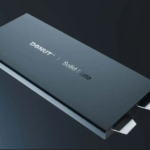
BYD’s second-generation Blade Battery, announced on 5 March 2026, changes that framing directly. The key engineering challenge the company set itself was resolving the traditional conflict between charging speed and energy storage — pushing more electrons in faster without damaging the cells. The solution, built into a 150kWh pack inside the Yangwang U7, achieves a 10%-to-70% charge in five minutes and 10%-to-97% in nine, verified independently across ten production models at between eight minutes 45 seconds and nine minutes 24 seconds.
More significant for anyone who has watched an EV struggle in winter: this nine-minute window holds down to 0°C and extends only to 15 minutes at minus 30 degrees. That last figure matters in Scandinavia, the Alps, and anywhere else where winter previously turned fast charging into a slower, more frustrating experience. Does this change what European buyers should expect as standard from any car — not just a Chinese one — that calls itself a luxury saloon?
The European Comparison
Nine Minutes Against Thirty-One
The European benchmark for this comparison is the Mercedes-Benz EQS, which uses a cobalt-and-nickel battery chemistry costing approximately 37 percent more per kilowatt-hour to manufacture than BYD’s iron-phosphate alternative. The EQS accepts up to 200kW of DC charging and completes a 10%-to-80% charge in 31 minutes — a figure confirmed by multiple current European reviews.
EQS range at up to 809km WLTP; EQS is among the longest-range electric saloons currently on European roads. Against the Yangwang U7’s 1,006km CLTC range estimate — with a WLTP equivalent not yet published, and an indicative real-world figure of approximately 750–800km — the range gap narrows or disappears entirely. The charging gap, however, does not narrow.
Nine minutes against 31 minutes is a different category of experience. The question for European buyers is not whether the EQS remains an exceptional car. It is whether the European OEM response — the architectures now in development that will match or approach these charging figures — will arrive before or after buyer expectations have already shifted based on what Chinese customers experience as normal today.
The Infrastructure Behind the Number
A Charging Network Europe Does Not Yet Have
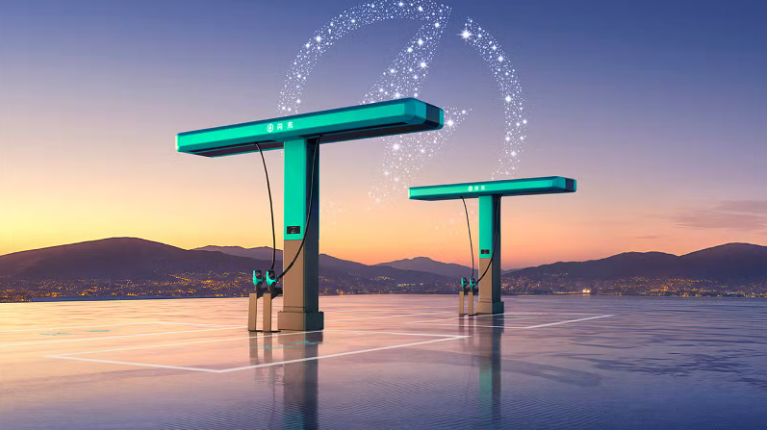
The charging hardware that makes nine minutes possible is equally significant. BYD’s 1,500kW Flash Charger uses a T-shaped design with cables suspended overhead, serving either side of the vehicle simultaneously, with on-site energy storage built into each station so the grid connection does not need to handle the full 1,500kW surge every time a car plugs in.
BYD confirmed 20,000 stations planned in China by year-end, and more than 3,000 ultra-fast chargers in Europe by end of 2026, with initial Polish sites confirmed capable of delivering 1,000kW through a standard CCS2 connector. Europe’s fastest public infrastructure today is Ionity, which as of late February 2026 has activated its first chargers capable of up to 600kW per vehicle at isolated sites in France — real progress, but still less than half BYD’s headline figure.
The Ownership Question
The Numbers a Buyer Has to Live With
For a European buyer or fleet manager choosing a vehicle today: where will BYD’s European charging network actually be — and at which locations — by the time you take delivery? How does the service and aftersales infrastructure compare with a European marque that has operated here for decades? What happens to resale value if the charging network a car is optimised for develops differently from expectations — or if buyer perception of Chinese brands shifts, in either direction, over a three-year ownership cycle?
These questions are not rhetorical. They are the ones a fleet manager pricing a four-year contract, or a dealer assessing used-car exposure, genuinely cannot yet answer.
The Question That Remains
If chemistry once considered a budget compromise now powers the world’s longest-range production saloon and charges in nine minutes — what, precisely, is the remaining technical argument for the premium European badge, and how long does that argument have left?