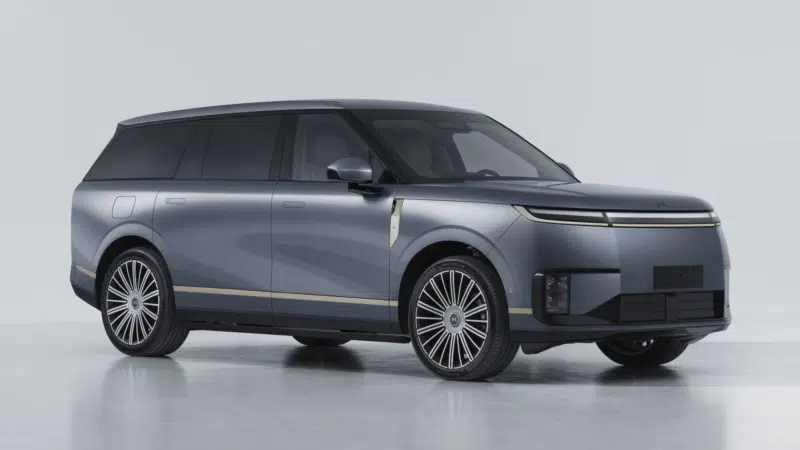

What Happened
Xpeng has commenced mass production of the GX, a six-seat full-size SUV, making it the first vehicle priced below 500,000 yuan in China to feature Bosch’s next-generation steer-by-wire system. The supplier states the system is compatible with L4 autonomous driving architectures and integrates over 100 functions. The GX runs on an 800V platform supporting 5C fast charging. At current exchange rates, the 500,000 yuan ceiling converts to approximately €63,500. Xpeng plans to launch the GX in April or May 2026.
Key dimensions: 5,265 mm in length, 3,115 mm wheelbase, dual-motor electric powertrain. In China the GX competes against the Li Auto L9 and Aito M9. No European market entry has been announced.
What It Means
Steer-by-wire removes the mechanical linkage between the steering wheel and the road wheels. That is a foundational change to vehicle control architecture, not an incremental feature update. Bosch’s system enables variable steering ratios and eliminates the physical steering column, with downstream implications for both interior design and autonomous driving integration.
The significance here is not that the GX is an autonomous vehicle. It is not. Hardware capability does not equal functional autonomy, and the system’s real-world reliability, failsafe performance, and software maturity can only be assessed after significant deployment at scale. What the GX represents is the first volume-production vehicle at this price point to carry hardware that is architecturally ready for L4 functions.
The European regulatory context adds a layer that the specification sheet alone does not capture. Safety standards for steer-by-wire systems are still under development in Europe, and approval pathways have not been finalized. This means that while Xpeng begins accumulating production experience and operational data with this technology, European manufacturers and regulators are still working through the frameworks that would govern its deployment. That gap is not permanent, but it is current and measurable.
On price, the comparison with European equivalents by size is direct. The Mercedes EQS SUV and BMW iX sit at significantly higher price points in European markets. Those vehicles do not currently offer steer-by-wire as a production feature.
The broader pattern is consistent with what is visible elsewhere in China’s EV sector: hardware capable of supporting advanced driver assistance functions is reaching volume segments faster than equivalent regulatory and commercial infrastructure is being built in Europe to receive it.
Whether that experience gap translates into a durable competitive advantage may depend on how quickly European regulators finalize approval pathways for steer-by-wire systems.