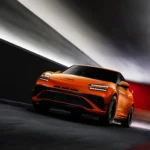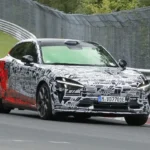
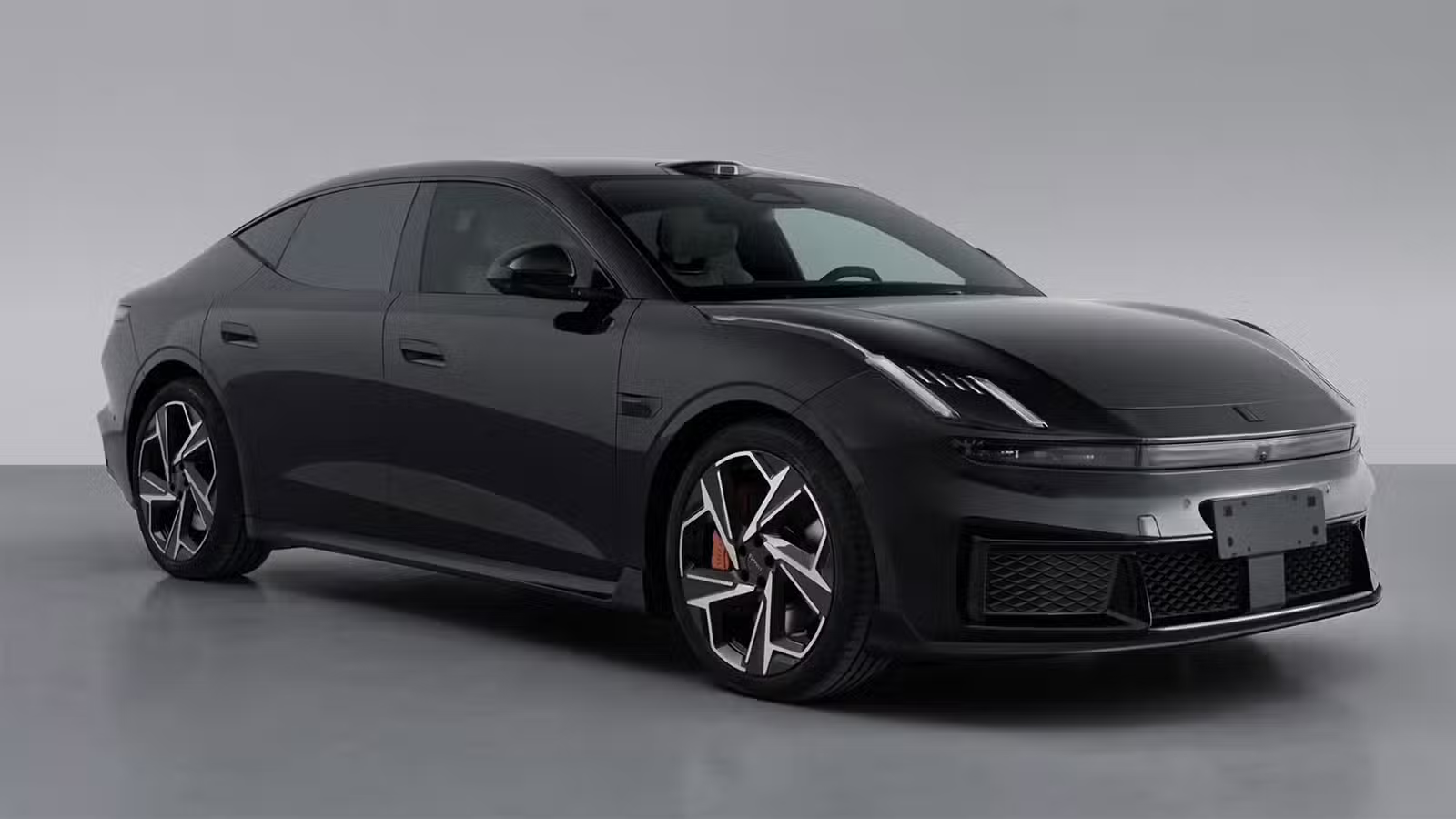

Lynk & Co’s first all-electric sedan launches in China in Q2 2026 with a 900V platform, 13-minute partial charge, and Nvidia Thor compute as standard. The engineering is Zeekr’s. The brand already has a subscription footprint in Europe. At a 28.8 percent import tariff, the landed European price lands around €65,300, against the BMW i5 and Mercedes EQE on specifications but not on brand history.
What Happened
Geely’s Lynk & Co brand has officially named its forthcoming all-electric sedan the Lynk & Co 10, confirming a Q2 2026 China launch. The vehicle measures 5,050 mm in length with a 3,005 mm wheelbase. It is offered in single-motor variants producing 402 or 496 horsepower, and a dual-motor version combining both for 925 horsepower total. The platform runs on a 900V electrical architecture, enabling a 10-to-60 percent charge in approximately 13 minutes. The car is equipped with LiDAR, an Nvidia Thor chip at 700 TOPS for driver assistance functions, and supports both highway and urban automated navigation. Lynk & Co sold 27,359 vehicles in February 2026, up 58.71 percent year-on-year. No European launch date or pricing has been announced.
One ownership detail shapes how this vehicle should be read. Zeekr, Geely’s EV-native brand, acquired a 51 percent stake in Lynk & Co in February 2025. The Lynk & Co 10 is built on Zeekr’s platform and carries its architecture. The brand name is Lynk & Co. The engineering foundation is not.
What It Means
The 13-minute partial charge is the most practically significant specification in this vehicle. It means adding roughly 200 kilometres of range in the time it takes to get a coffee. The BMW i5 M60, a direct size competitor in Europe, charges at up to 205 kW on a 400V system. The Lynk & Co 10’s 900V platform supports higher peak charging power and faster recovery between sessions. That difference is real and measurable in everyday use.
The computing hardware tells a similar story. The Nvidia Thor chip at 700 TOPS supports both highway and urban automated driving functions as standard equipment. Most current European production cars in this segment run on significantly less capable chips.
The European picture has two open variables. First, Lynk & Co already operates a subscription model in Europe, giving it existing infrastructure that most Chinese brands lack. Second, the current combined tariff rate for Geely and Lynk & Co vehicles imported from China stands at 28.8 percent. At a hypothetical Chinese base price of 400,000 yuan, approximately €50,600, the landed European cost would rise to roughly €65,300. That places it against the BMW i5 and Mercedes EQE on size and specifications, but not on decades of brand recognition in the premium segment.
Whether Lynk & Co’s existing European presence and Zeekr’s platform credentials are sufficient to close that brand gap, and under which tariff conditions the vehicle eventually arrives, are the questions a 2027 European launch would begin to answer.