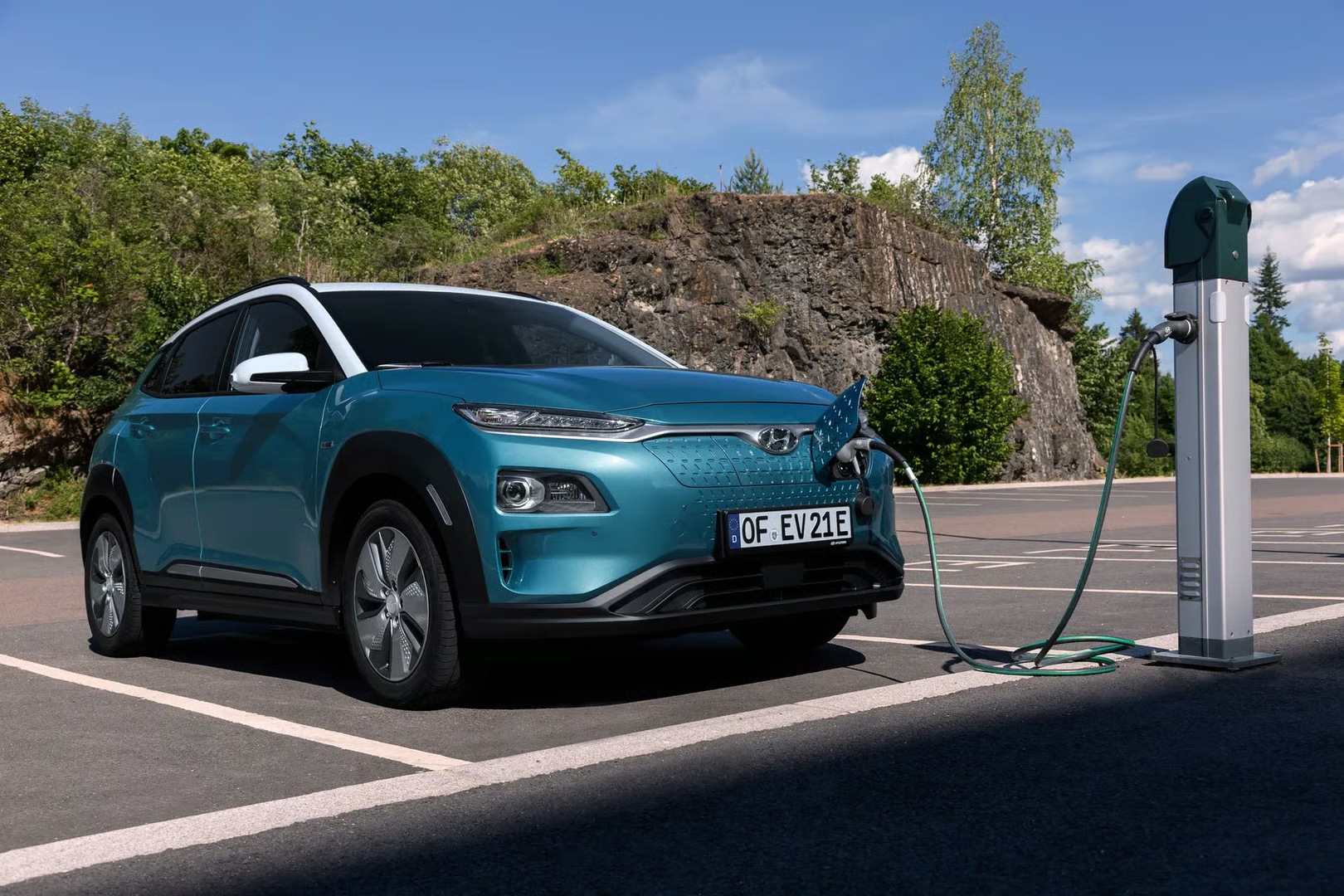

Hyundai is recalling over 104,000 first-generation Kona Electric vehicles globally, including 13,523 in Germany, over a battery management software fault that may fail to detect fire risk. It is the second recall for this generation. The EU’s Digital Battery Passport mandate arrives in February 2027. The Kona case illustrates what the gap between current practice and that standard looks like.
What Happened
More than 104,000 first-generation Hyundai Kona Electric vehicles produced between January 2018 and July 2023 are subject to a global recall for a software fault in the battery management system. The fault may fail to detect dangerous heat buildup in the high-voltage battery, increasing fire risk. Germany alone accounts for 13,523 affected units. The fix is a software update, though battery replacement may be required in some cases.
The batteries in affected vehicles were supplied by LG Chem, now LG Energy Solution. Hyundai faced a previous recall in South Korea in 2020 for related cell defects in the same generation. Vehicles built at Hyundai’s Czech plant, which supplied most European deliveries after 2020, may not be affected, though this has not been confirmed. The second-generation Kona, introduced in October 2023, is not implicated.
What It Means
This is the second major battery-related recall for first-generation Kona units. The pattern matters beyond the immediate safety issue.
Germany’s 13,523 affected vehicles represent a concrete problem in Europe’s largest EV market at a specific moment: the used EV market is growing, and buyer confidence in older battery technology is a condition of that growth. A recall of this scale, in this market, at this time, creates a headwind that a software update alone does not fully resolve. Consumer confidence in a used vehicle is harder to restore than the software that runs it.
The broader regulatory context is relevant. The EU Battery Regulation requires battery labeling compliance by August 2026 and a full Digital Battery Passport by February 2027. Both obligations are built around the principle that buyers and regulators should have transparent access to battery health and safety data before a problem becomes a recall. The Kona case illustrates what the gap between current practice and that standard looks like in practice.
The recall affects a closed production cohort and Hyundai has a defined technical fix. Those are important qualifications. But the question the recall raises for the wider industry is whether proactive battery management transparency, built into vehicles from the start, would have changed the timeline between the original 2020 South Korean campaign and this 2026 global action.