
Huawei runs two separate EV operations, and they are now competing for the same premium buyers in China. The Qijing GT7 launch puts Huawei’s Car BU on a collision course with its own Hongmeng division, in a segment that shrank sharply in 2025.
What Happened: Qijing (Aistaland) GT7 Enters a Market Already Targeted by Huawei’s Own Hongmeng Division
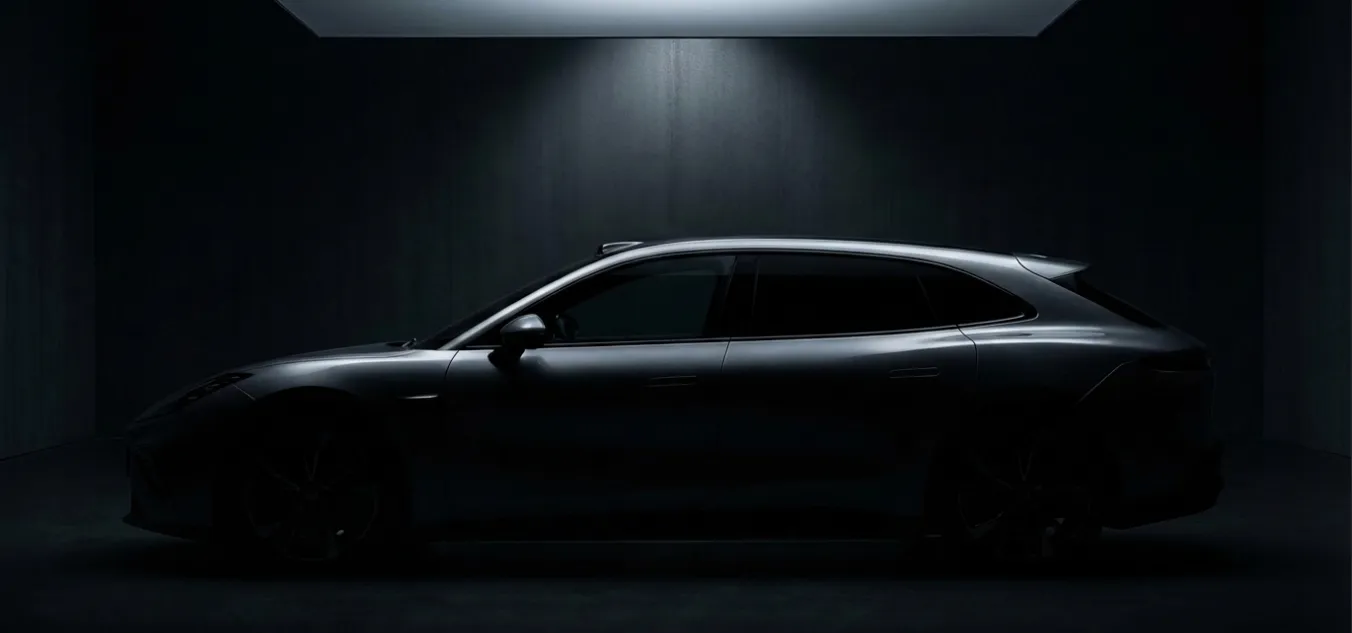
On March 17, Huawei’s Automotive Business Unit (Car BU) and GAC Group officially unveiled the GT7, the first model from their jointly built brand, Qijing (Aistaland) Automobile. The car targets what the Chinese market calls the “hunting vehicle” segment, a shooting brake body style that combines sedan proportions with SUV cargo space and a coupe roofline. Pricing has not been announced, but GAC previously positioned the Qijing brand at the 300,000 yuan (roughly €38,000) level.
The GT7’s launch matters beyond the car itself because of where Qijing sits inside Huawei’s structure. Huawei runs two parallel automotive operations. The first, HIMA (Harmony Intelligent Mobility Alliance), is led by Huawei’s consumer division and operates five co-branded vehicles under a “Jie” naming convention, sold through Huawei’s own retail network with partners including SERES, Chery, BAIC, JAC, and SAIC. The second is Huawei’s Car BU, operating under the separate “Qianwei” technology brand, co-developing “Jing” series vehicles with GAC and Dongfeng. Qijing operates entirely outside HIMA’s sales infrastructure.
Both are now targeting the same buyers. Shangjie, one of HIMA’s five brands, announced its own shooting brake, the Z7T, in early March, with pre-orders opening late March.
What It Means for China’s Premium EV Market in 2026
The segment both divisions are entering is small and was contracting through 2025. The best-selling shooting brake in China moved only a few thousand units per month last year. The 300,000 to 350,000 yuan band saw NEV sales fall 12.9% year-on-year. Early 2026 data shows a partial recovery: sales in that range grew 0.7% in the first two months, partly linked to a revised subsidy structure tied to vehicle pricing.
Qijing has already confirmed a second model, a medium-to-large SUV expected later in 2026, which would put it in direct competition with HIMA’s Wenjie lineup.
Whether Huawei’s two divisions end up expanding China’s premium NEV segment or quietly cannibalising each other is a question Beijing, their manufacturing partners, and Huawei’s own leadership will be watching closely.