
Takeaways:
- The C-HR+’s competitive position is partly structural: manufactured in Japan, it carries no EU anti-subsidy surcharge, placing it at a price-range combination that Chinese BEV imports cannot currently match under the 27% combined tariff. That advantage has an expiry date tied to BYD’s Hungary production timeline.
- Toyota’s 10-year battery warranty programme guaranteeing 70% capacity retention has no equivalent among Chinese mass-market brands in European markets. For first-time EV buyers weighing reliability risk, this may prove as significant as the range figures.
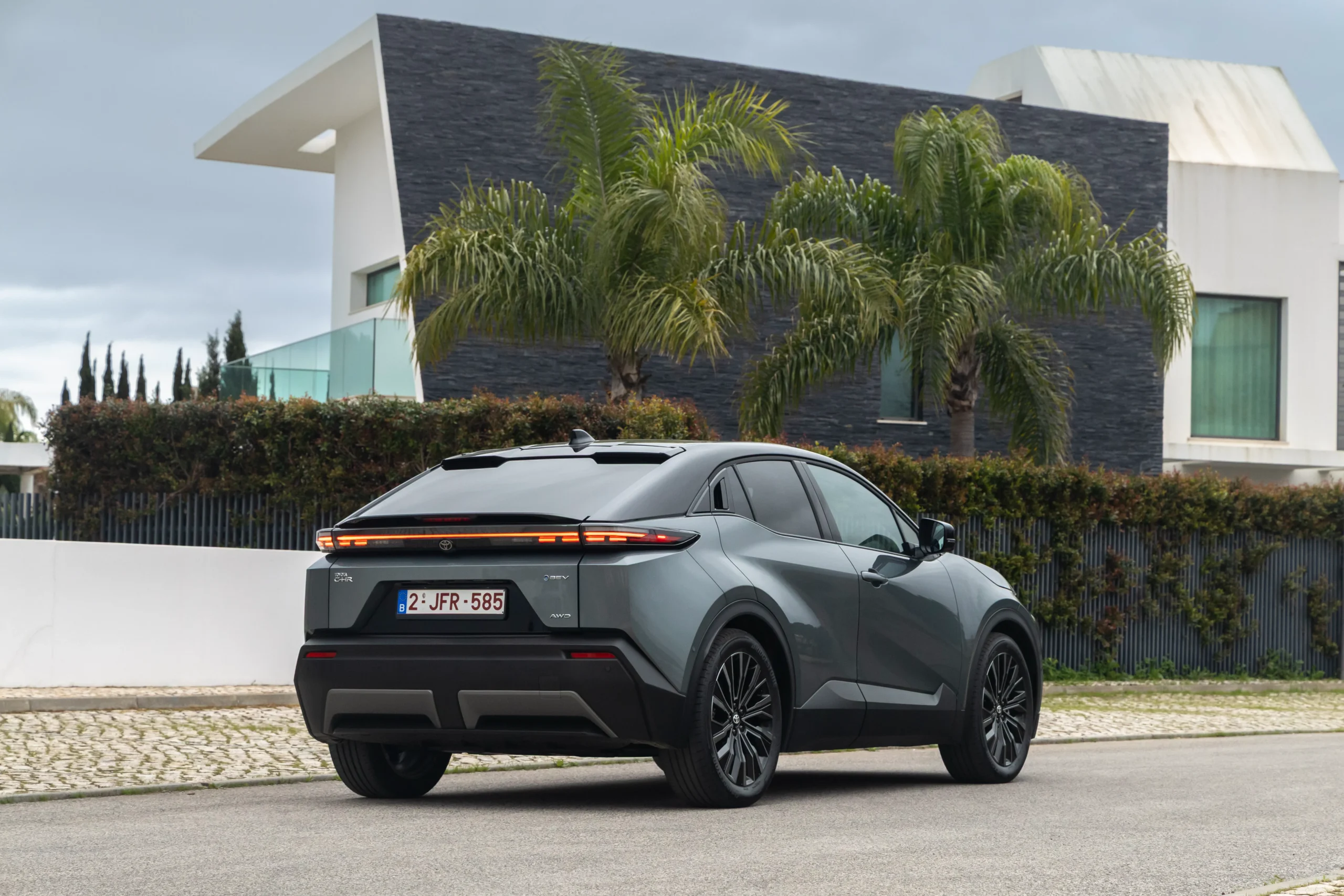
Toyota’s C-HR+ BEV arrived in European showrooms in March 2026 with 607km WLTP range, 150kW charging that works at -10°C, and a 10-year battery warranty from €38,990 in Germany. Built in Japan, it carries no anti-subsidy duty. BYD’s equivalent EU pricing depends on Hungarian production that has not yet scaled.
What Happened: Toyota Begins European Deliveries of Its Longest-Range BEV in March 2026
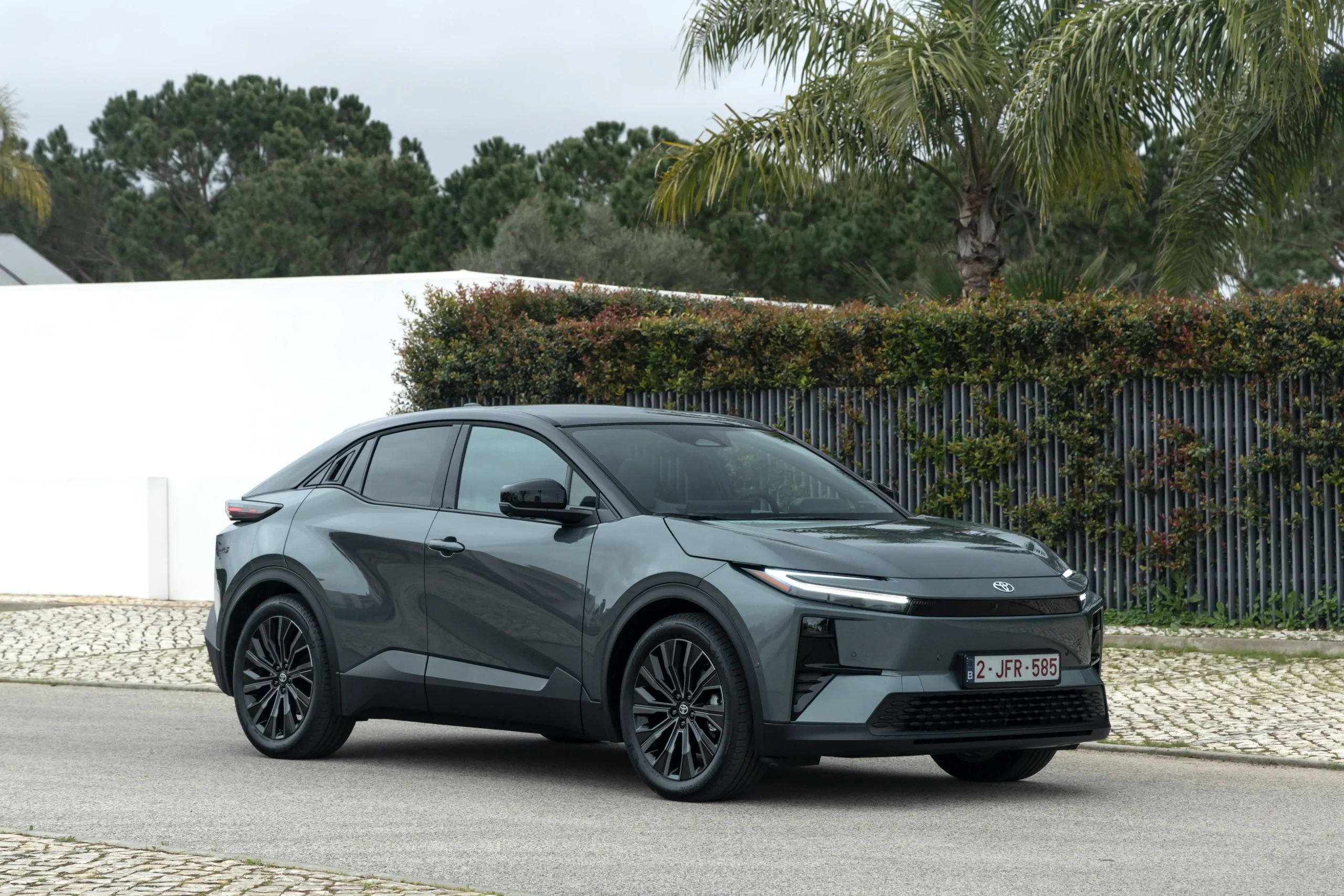
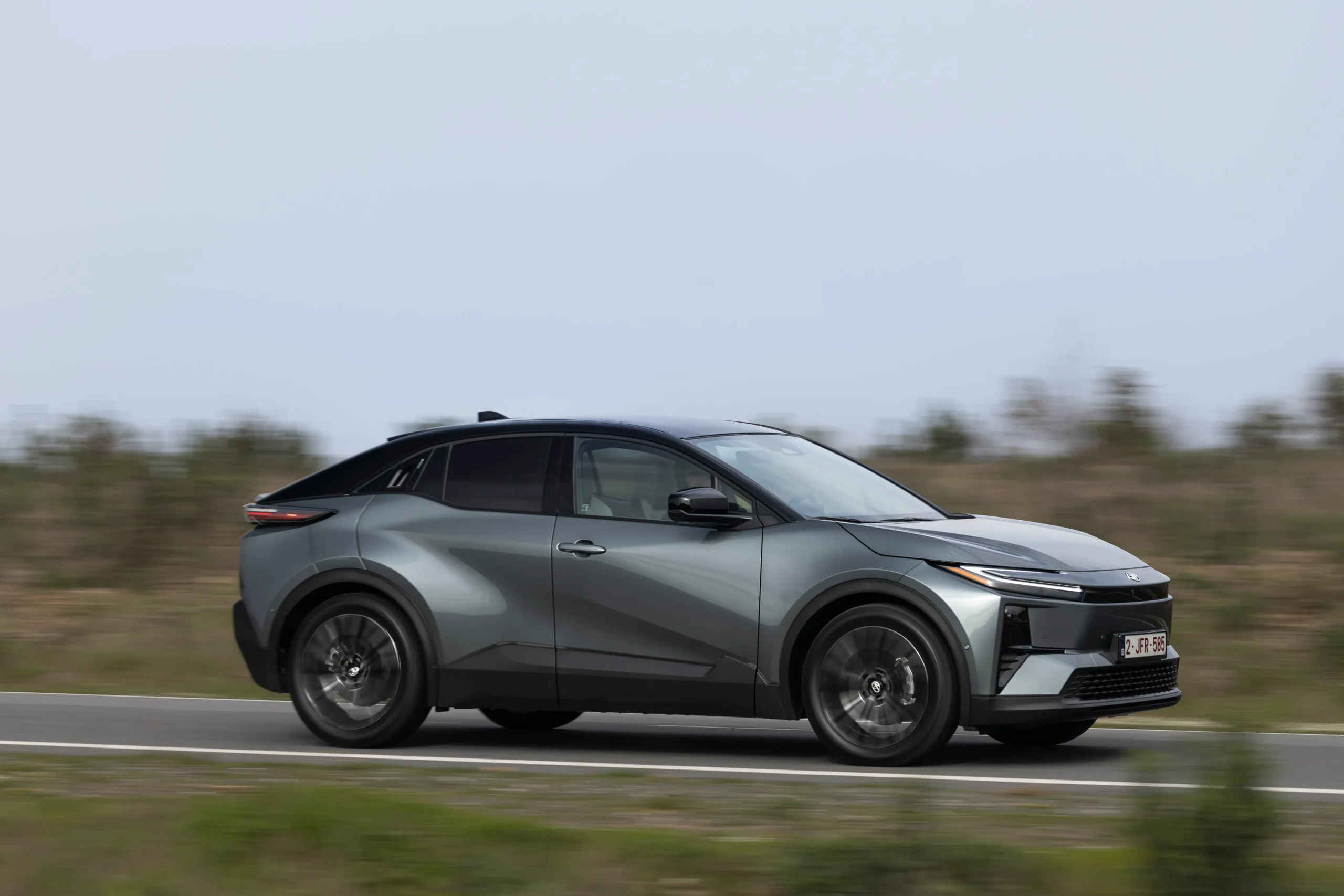
Toyota began customer deliveries of the C-HR+, a fully electric compact SUV, across European markets in March 2026. The car is built on Toyota’s dedicated eTNGA platform and manufactured in Japan, placing it outside the EU’s anti-subsidy duty framework that applies to electric vehicles imported from China.
Three grades are available. The entry Mid grade starts at €38,990 in Germany, comes with a 57.7kWh battery, front-wheel drive, and 458km WLTP range. The 77kWh battery on the front-wheel-drive Mid+ brings 607km WLTP, Toyota’s longest range on any current BEV in its European lineup. The AWD High grade delivers 343hp, 0-100km/h in 5.2 seconds, 548km WLTP, and a 1,500kg towing capacity.
All variants come with 150kW DC fast-charging, taking 10-80% in approximately 28 minutes. With battery pre-conditioning active, that figure holds at temperatures as low as -10°C, which Toyota achieves using a water-to-water heat exchanger that heats all cells evenly before charging begins. This directly addresses the winter charging anxiety that slows EV adoption in northern and eastern Europe. The High grade adds a 22kW onboard AC charger.
The battery is covered under a two-stage programme. The standard EV Manufacturing Warranty covers 8 years or 160,000km. Toyota’s Battery Care Programme then extends that to 10 years or one million kilometres, activated by an annual health check at an official Toyota dealer. Both stages guarantee the battery retains at least 70% of its original capacity. No Chinese mass-market brand currently selling in Europe offers equivalent terms. BYD’s standard battery warranty in the EU runs to 8 years.
What It Means: A Japan-Built Benchmark That Chinese Rivals Cannot Currently Match on Price in the EU
The C-HR+’s competitive position in the EU compact BEV segment is partly structural. Built in Japan, it carries no anti-subsidy surcharge. BYD, under EU Implementing Regulation 2024/2754, faces a 27% combined tariff on vehicles imported from China — the standard 10% plus a 17% countervailing duty. That burden makes it commercially difficult for BYD to match €38,990 in European showrooms without absorbing significant margin or waiting for local production to scale.
BYD’s Hungary plant is targeting production in 2026, and once it reaches meaningful volume it removes the tariff entirely for EU-built vehicles. Until that point, the C-HR+ holds a price and range combination that Chinese compact BEV alternatives cannot currently replicate under equivalent tariff conditions.
The 10-year battery warranty is the less obvious but potentially more durable competitive differentiator. For buyers considering their first electric car, especially in markets where reliability trust matters as much as range figures, Toyota’s decades of hybrid reliability reputation now transferred to a structured BEV warranty programme addresses a concern that Chinese OEMs have not yet systematically closed with comparable terms in European markets.
Whether the gap between now and BYD’s Hungarian production reaching meaningful scale is wide enough for the C-HR+ to establish lasting consumer loyalty in the European compact BEV segment is a question both Toyota’s European sales teams and BYD’s production planners are watching at the same time.