
Takeaways:
- The Starray EM-i’s 136km electric range at €32,990 undercuts European PHEV rivals while legally bypassing the BEV-specific anti-subsidy duty.
- Geely’s tariff advantage may be temporary, as the EU extended anti-subsidy measures to Chinese PHEVs in January 2026, though implementation timing remains uncertain.
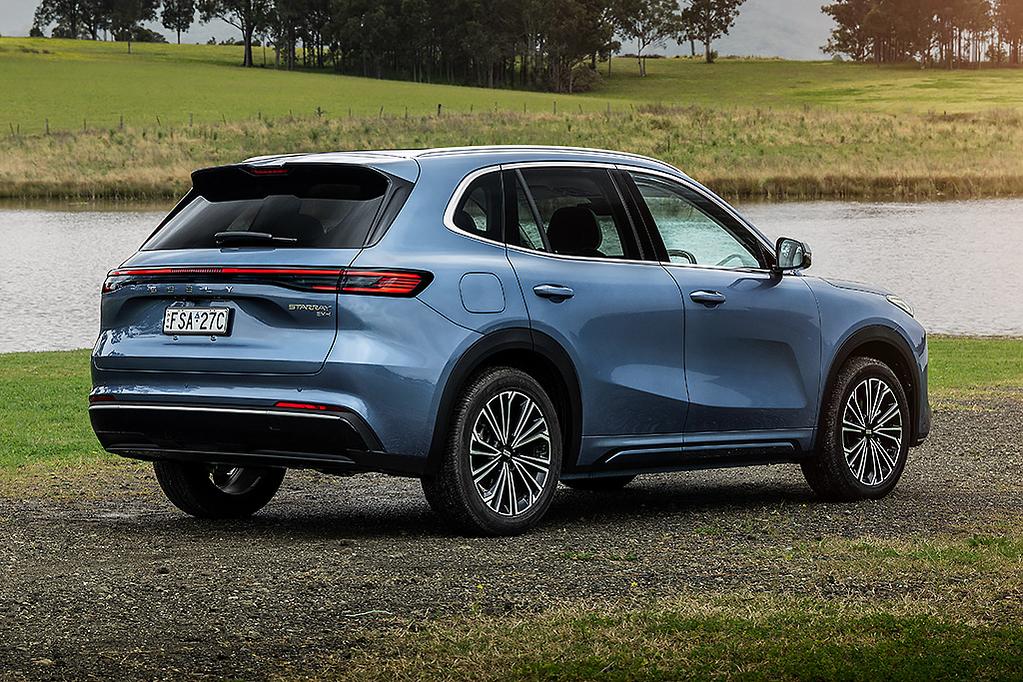
Geely has entered five Western European markets with the Starray EM-i PHEV, which avoids BEV anti-subsidy duties and offers 136km of electric range at €32,990. Geely uses the gap in EU tariff architecture that European rivals already lobbying against.
Geely has completed a coordinated market entry across five Western European countries, introducing two electrified SUVs at prices that challenge the competitive logic of the EU’s import duty regime. According to a March 25 announcement, the Starray EM-i plug-in hybrid and the E5 battery-electric vehicle are now available in Germany, Spain, the Netherlands, Belgium, and Luxembourg, expanding Geely’s European footprint to nearly 20 markets.
Why the Starray EM-i Avoids BEV Tariffs
The Starray EM-i starts at €32,990 in Germany, with a 29.8 kWh battery delivering 136 km of electric-only range, according to Geely’s German press release . The combined range exceeds 1,000 km. The vehicle uses a 1.5-liter petrol engine from the Horse Powertrain joint venture between Geely and Renault.
The PHEV classification means it faces only the standard 10 percent import duty, not the 18.8 percent anti-subsidy duty applied to Geely’s BEVs . This creates a price gap: the E5 BEV starts at €37,990 after absorbing the 18.8 percent duty plus the 10 percent base tariff.
How EU Tariff Rules May Shift
The Starray’s tariff status may be transitional. In January 2026, the EU extended anti-subsidy measures to plug-in hybrids imported from China, though implementation details and effective dates remain unclear .
Geely’s current PHEV imports may operate under a different classification window. The question for European fleet managers and policy analysts is whether the EU’s tariff architecture will be adjusted to close what currently functions as a competitive gap in the PHEV segment, where European rivals offer 50 to 90 km of electric range at comparable prices .
Geely’s E5 BEV competes directly with the Volkswagen ID.4 and Skoda Enyaq, offering a five-star Euro NCAP rating and an eight-year or 200,000 km vehicle warranty . The Amsterdam spare parts hub and planned expansion to 35 Benelux locations by year end indicate infrastructure preparation .
If the EU’s January 2026 PHEV tariff extension takes full effect before Geely scales Starray volumes, does the current pricing advantage exist only as a window of regulatory asymmetry rather than a durable structural cost advantage?