
Takeaways
- Ford‘s Model e division lost $4.8 billion in 2025, with the Cologne‑built Explorer and Capri directly included in that loss figure.
- The company recorded approximately $19.5 billion in special item losses from cancelling BEV programmes, including the F‑150 Lightning, and shifted focus to hybrids and extended range electric vehicles.
According to Ford Motor Company’s 2 April 2026 sales report, U.S. electric vehicle deliveries fell nearly 70% year on year in the first quarter of 2026 to 6,860 units. Total U.S. vehicle sales fell 8.8% to 457,315 units. The company’s Model e division, which covers passenger battery electric vehicles including the Cologne‑built Ford Explorer and Capri, posted an operating loss of $4.8 billion for the full year 2025, slightly improved from $5.1 billion in 2024.
The division’s revenue grew 73% to $6.7 billion, but losses persisted due to high fixed costs. Ford expects Model e losses of between $4.0 billion and $4.5 billion for 2026.
Ford’s Strategic Retreat From BEVs
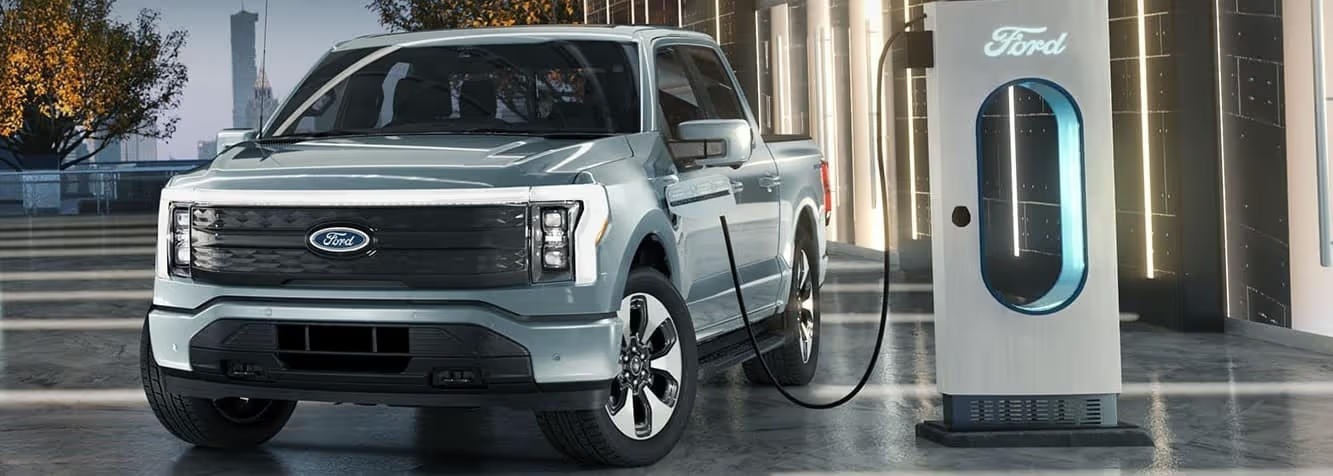
In December 2025, Ford announced a strategic pivot, reducing BEV investment in favour of hybrids and extended range electric vehicles. The company recorded approximately $19.5 billion in special item losses from cancelling several planned battery electric models, including the F‑150 Lightning all‑electric pickup, which ended production in 2025.
Ford cited affordability pressures, high financing costs, and the expiry of federal EV tax credits as demand headwinds. The company expects an additional $5.5 billion in cash expenditures related to the restructuring through 2027.
What the Cologne EV Centre Losses Mean for Europe
The Cologne Electric Vehicle Centre, which builds the Ford Explorer and Capri for European markets, is directly implicated in the Model e loss figure. Production has been well below the plant‘s 250,000 annual capacity. Ford sold fewer than 19,000 Explorers in Europe in the first half of 2025, and significantly fewer Capris.
In September 2025, the company announced a shift from two shifts to one shift in Cologne, cutting a further 1,000 jobs. EU CO₂ rules for 2025‑2027 include a three‑year averaging flexibility, allowing manufacturers to meet emissions targets over the full period rather than annually. This provides a cushion but does not resolve the demand side.
The Open Question
One reading of Ford’s results is that BEV affordability pressure is now transatlantic. The EU‘s averaging flexibility gives manufacturers time, but does it encourage faster BEV competitiveness or simply slow the transition?
The open question is whether Ford’s European BEV commitment, specifically the Cologne EV Centre and future BEV product plans, is being revisited in light of the Model e losses, and what that would mean for German industrial employment and the EU‘s industrial strategy.