
Takeaways
- Kia‘s first SDV with semi-automated highway driving will arrive in 2028, a one-year delay, while a city-capable version follows in early 2029.
- The company cut its 2030 EV target by 20% to 1 million units but raised its hybrid target 60% to 1.1 million units, increasing investment by 30% to $28 billion.
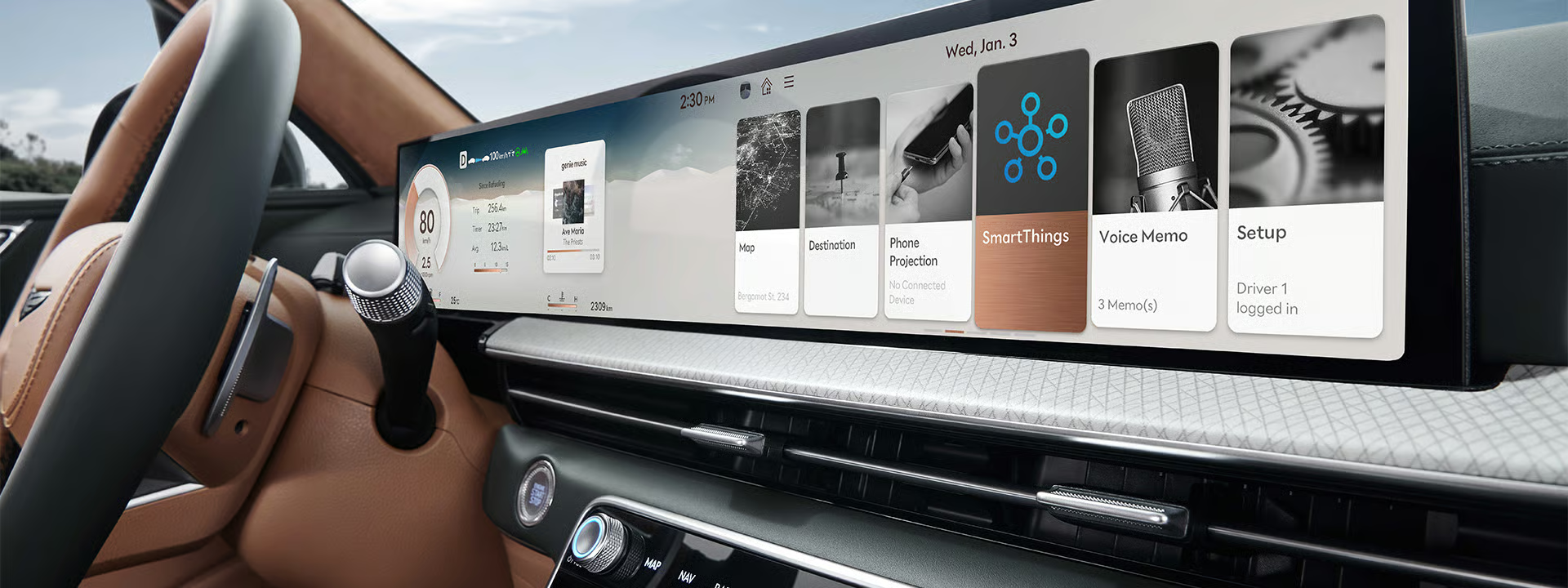
According to an investor presentation on 9 April 2026, Kia has delayed its first software-defined vehicle (SDV) by one year to 2028. The company now plans to introduce a test version of its SDV by the end of 2027, equipped with semi-automated driving technology for highways.
A more advanced vehicle capable of operating in city streets will follow in early 2029. Both Kia and its sister company Hyundai Motor are seen as laggards in self-driving technology compared to Tesla and Chinese rivals.
SDV Launch Pushed to 2028 as Hybrid Targets Rise
Kia has cut its 2030 electric vehicle sales target by approximately 20% to 1 million units annually, reflecting weaker demand and the scrapping of EV subsidies in the United States. In place of the lost EV volume, the company has raised its annual hybrid sales target by about 60% to 1.1 million units by 2030, supported by a lineup growing to 13 models.
Combined with the EV target, Kia plans to sell 2.1 million electrified passenger vehicles per year by the end of the decade, out of a total of 4.13 million units. The company has increased its investment plan for 2026 to 2029 by 30% to 41.4 trillion won (approximately $28 billion), focusing on electrification, software and new businesses.
Software Gap Acknowledged With Nvidia and Tesla Hire
The delay follows the resignation of Hyundai‘s former president Song Chang-hyeon, who had spearheaded the group’s SDV efforts, in December 2025. He has been replaced by Park Minwoo, a former Nvidia and Tesla engineer who led autonomous driving development from research through to commercialisation. Kia is investing more than $500 million in physical AI capabilities and vision-language-action models, and is expanding collaborations with Google’s DeepMind and Nvidia.
The company plans to deploy Boston Dynamics‘ Atlas humanoid robots at its Georgia plant starting in the second half of 2029.
The open question is whether Kia’s 2028 SDV timeline will leave European consumers comparing available Chinese models with highway autonomous driving today against Kia vehicles that are still two years away from offering similar features.