
Takeaways:
- Sodium-ion is moving from CATL’s single-player lead to a multi-competitor field, with BAIC and BYD advancing credible prototypes alongside CATL’s already-confirmed Nevo A06 launch — a shift that historically accelerates cost reduction across the whole segment.
- The cold-weather performance advantage is directly relevant to EV adoption barriers in northern and eastern Europe, where European sodium-ion developers are active but none have announced a passenger EV application at production scale.
BAIC has completed a sodium-ion battery prototype with 4C charging, a full charge in 11 minutes, and over 92% capacity retention at -20°C. The technology is no longer theoretical. European manufacturers are developing sodium-ion cells, but none have a mass-production passenger EV application announced.
What Happened: BAIC Completes Sodium-Ion Battery Prototype With 4C Charging
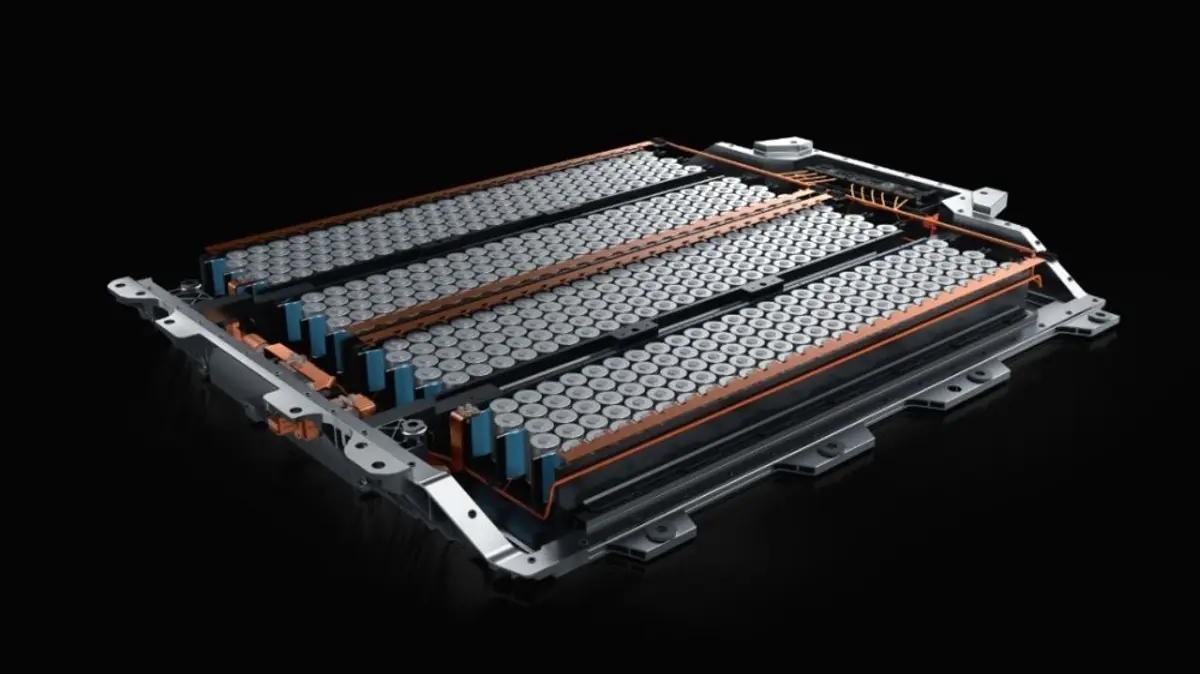
BAIC has completed prototype development of a prismatic sodium-ion battery cell, establishing a mass production process alongside it. The cell achieves an energy density of 170 Wh/kg, operates across a temperature range of -40°C to 60°C, retains over 92% of its energy capacity at -20°C, and supports 4C fast charging, delivering a full charge in approximately 11 minutes. Twenty patents have been filed covering materials, electrolytes, and system integration. The battery forms part of BAIC’s Aurora platform, which now covers lithium-ion, solid-state, and sodium-ion chemistries.
BAIC has not disclosed the final energy capacity of the pack, which means real-world range figures cannot yet be calculated from the cell-level data alone.
BAIC is not the first mover. In February 2026, Changan and CATL unveiled what they described as the world’s first mass-produced sodium-ion passenger vehicle, the Nevo A06, built around CATL’s Naxtra battery at 175 Wh/kg and a 45 kWh pack, with a range exceeding 400 km and a market launch targeted for mid-2026. CATL’s Naxtra delivers nearly triple the discharge power of equivalent LFP batteries at -30°C and maintains over 90% capacity retention at -40°C. BYD’s third-generation sodium-ion platform is also in development, with a reported cycle life of up to 10,000 charge cycles. BAIC’s prototype confirms a third credible Chinese player at comparable specifications. MIT Technology Review named sodium-ion one of its 10 Breakthrough Technologies of 2026.
What It Means: Cold-Weather Performance Is the European Story
Sodium-ion is moving from CATL’s single-player leadership to a multi-competitor landscape. That shift historically compresses both cost and development timelines faster than any single-player roadmap can.
For European markets specifically, the cold-weather performance data carries direct relevance. At -20°C, BAIC’s sodium-ion cell retains over 92% of its capacity, where LFP batteries degrade significantly under the same conditions. In Finland, Norway, Sweden, Poland, and the Baltic states, winter range loss is a documented and persistent barrier to EV adoption. That specific gap is what sodium-ion addresses most directly.
The 4C charging claim is the most ambitious figure in this development. If it survives independent validation at pack level, BAIC’s sodium-ion system would charge faster than most current 800V lithium platforms. That caveat matters: cell-level test results and production-ready pack performance are not the same thing, and BAIC has not yet confirmed a vehicle integration timeline.
European manufacturers including Tiamat in France, Altris in Sweden, and Bihar Batteries in Spain are developing sodium-ion cells, but none have announced a mass-production passenger EV application. The gap is not in awareness — it is in the pace of commercialisation. Whether that gap narrows before Chinese sodium-ion vehicles begin entering European markets in volume is a question the continent’s battery industry has not yet seriously begun to answer.