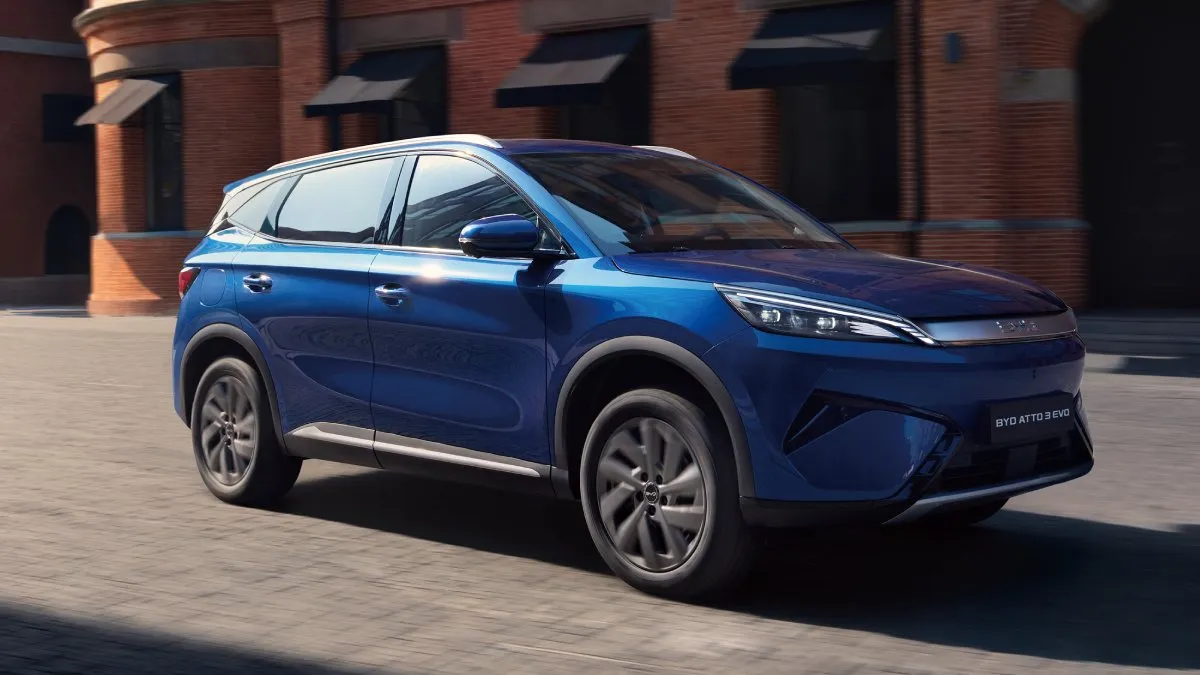

BYD’s Atto 3 Evo brings 220kW fast-charging to Europe and is already on sale in E.U. markets. The specs close the gap with premium rivals. The pricing, the tariffs, and a looming E.U. regulation make the full picture considerably more complicated.
What Happened: BYD Launches the Atto 3 Evo Across Europe and the UK
BYD has launched the Atto 3 Evo in both the UK and E.U. markets. UK orders open April 2, 2026, with the entry Design trim at £38,990 and the Excellence AWD variant at £42,730. In Greece, the car is already on sale at €39,990 list for the Design and €42,990 for the Excellence. National incentives bring those figures down further: combining the Greek state subsidy and a dealer bonus, buyers can access the Design at €33,990 and the Excellence at €36,990.
Both variants run on BYD’s 800V e-Platform 3.0 with a 74.8kWh LFP Blade Battery built into the chassis using Cell-to-Body architecture. The headline figure is charging: 220kW DC fast-charging brings 10-80% in 25 minutes, adding roughly 190 miles on a typical motorway stop. The outgoing Atto 3 was capped at 88kW. WLTP range reaches up to 510km on the Design trim.
What It Means: Tariffs, Pricing Strategy, and a Race Against Regulation
The 220kW figure matches the Hyundai Ioniq 5’s peak DC charging capability, a car that costs more in most European markets. The technical gap that European brands spent two years marketing as a structural advantage is now closed in the mainstream SUV segment.
The more layered question is how the pricing works. The UK applies a standard 10% import duty on Chinese EVs. The E.U. applies 27%, the standard 10% plus a 17% countervailing tariff on BYD specifically. Yet the Greek list price of €39,990 is notably lower than the UK’s £38,990, which converts to roughly €46,000 at current rates.
Several explanations are plausible, though none are confirmed. Right-hand drive markets like the UK typically carry a modest price premium due to lower production volumes compared to left-hand drive versions sold across continental Europe. BYD may also be absorbing part of the tariff burden in E.U. markets, accepting compressed margins now to buy market share and brand positioning. And crucially, that short-term cost may be a calculated investment: once BYD’s Hungary plant begins producing the Atto 3, trial production started in early 2026, with the Atto 3 scheduled for a later phase, the 27% tariff disappears entirely and margins recover naturally.
There is a further regulatory complication. In January 2026, the European Commission issued guidance for Chinese EV exporters on price undertaking offers, covering minimum import prices per model and configuration. If BYD submits an undertaking that sets a price floor above the current €39,990 list price, the current E.U. pricing could become structurally impossible to maintain. Hungarian production would sidestep that constraint entirely, since locally built cars fall outside the import undertaking framework.
At €33,990 after incentives, the Atto 3 Evo lands almost exactly where the Skoda Elroq starts. Whether BYD can hold that position as subsidies tighten, the undertaking framework takes shape, and Hungarian production comes online will determine whether this launch is remembered as a turning point or a temporary window.