
Imagine you’re at a gas station. You stick the nozzle in, and before you can even walk inside to buy a coffee, your tank is full. For electric vehicles, that “5-minute fill-up” has always been the “Holy Grail” and for many scientists, it was considered a physical impossibility.
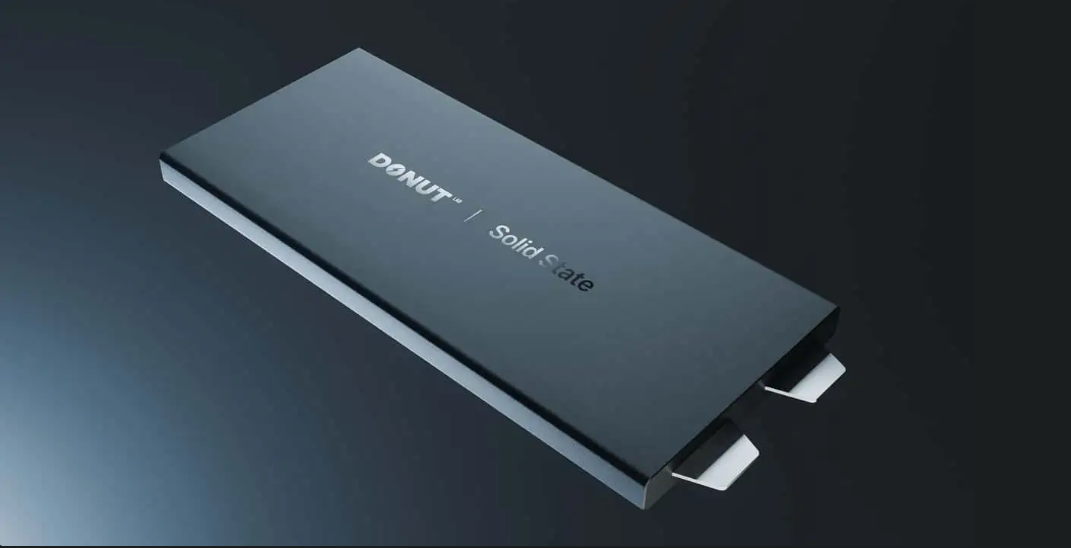
Until February 23, 2026. The VTT Technical Research Centre of Finland released the first independent validation of Donut Lab’s all-solid-state battery. The results are causing a massive stir because they just did something the “laws of physics” said shouldn’t be possible.
The Conflict: Energy Density vs. Heat
To understand why this is a big deal, think of a battery like a performance engine. When you push an engine to its limits (high energy) and try to run it at max RPM (fast charging), it generates massive heat. In a standard battery, this heat is the enemy.
Skeptics, including the CEO of major battery maker Svolt, argued that you simply cannot have a battery as energy-dense as 400Wh/kg (nearly double a Tesla’s) and charge it in under 5 minutes without it melting. They called the claim “contradictory” and “impossible.”
When the report says this moves the “impossible” into “measurable physics,” it means it’s no longer just a marketing slide. VTT recorded a 26 Ah cell hitting an 11C charging rate, blasting from 0 to 80% in just 4.5 minutes. The battery didn’t explode; it hit a peak of 90C and remained stable.
The 6 Claims (1/6 Verified)
This VTT test is only the first chapter. Donut Lab has six massive “pillars” they need to prove to change the world. So far, they have only checked off the first one:
- Ultra-Fast Charging: ✅ (Verified by VTT)
- High Energy Density 400Wh/kg: ⏳ (Next test)
- 100,000 Charge Cycles: ⏳ (Unproven)
- Temperature Tolerance -30C to 100C: ⏳ (Unproven)
- Total Safety: ⏳ (Unproven)
- Low Cost: ⏳ (Unproven)
-To understand what makes Donut Lab’s claims unusual, it helps to see what everyone else is doing.
The Global Arena: Donut Lab vs. The Goliaths
Donut Lab isn’t alone in this race. Several global giants are also sprinting toward the solid-state finish line, but their strategies vary significantly:
Changan Automobile (China): Their “Jinzhongzhao” project aims for a similar 400Wh/kg density and a massive 1,500 km range. While Donut Lab is already in the validation phase, Changan is targeting its first vehicle tests by Q3 2026, with mass production slated for 2027.
Basquevolt (Spain/Renault Partner): This European contender uses a lithium-metal cell with a polymer electrolyte. They have already demonstrated a higher energy density of 450Wh/kg and claim their manufacturing process could be 30% cheaper and more compact than current tech.
CATL & BYD (Global Leaders): The world’s two largest battery makers are taking a more cautious approach. Both are targeting small-scale production by 2027, with CATL aiming for a theoretical peak of 500Wh/kg. Unlike Donut Lab, which claims its tech is “mass-production ready” today, these giants don’t expect large-scale commercial application until 2030.
While Changan and Basquevolt are close in energy density, Donut Lab’s primary differentiator is its verified charging speed and its claim to use no lithium or rare earth elements, a stark contrast to the lithium-metal focus of its competitors.
The solid-state battery landscape is currently divided into three primary chemical families (Sulfide, Oxide, and Polymer), while Donut Lab claims a fourth, highly disruptive category. Below is a comparison of the specific technology “setups” used by the companies mentioned versus the unique claims made by Donut Lab.
1. Donut Lab: The “Non-Lithium” Disruptor
Unlike the major industry players who are iterating on lithium-ion chemistry, Donut Lab differentiates itself through a “materials-first” approach that reportedly moves away from rare and volatile elements.
Core Technology: Proprietary all-solid-state chemistry using “abundant materials.” Key Differentiator: It is claimed to be Lithium-Free and Rare-Earth Free. Experts theorize it may be a Sodium-metal or Surface-redox system, potentially utilizing a “supercrystal sponge” lattice to achieve high surface area. Performance Setup: Designed for passive cooling (eliminating heavy liquid cooling systems) and an extraordinary 100,000-cycle life — performance usually only seen in supercapacitors. Current Status: Claims to be production-ready for the Verge TS Ultra motorcycle in 2026.
2. CATL & BYD: The Sulfide Path
Both CATL and BYD have converged on Sulfide-based electrolytes, which are considered the “Gold Standard” for performance but are difficult to manufacture.
Core Technology: Sulfide electrolytes. Ion Carrier: They still rely on Lithium, whereas Donut Lab claims to avoid it. Conductivity: Sulfides have the highest ionic conductivity (matching liquid electrolytes), allowing for high power. However, they are sensitive to air and moisture, producing toxic hydrogen sulfide gas if the seal fails — a risk Donut Lab claims to have eliminated with “abundant/stable” materials. Manufacturing: Requires “dry electrode” processes and high-pressure “isostatic pressing” to maintain contact, making them very expensive to scale (3–5x current costs).
3. Basquevolt: The Polymer Path
Renault’s partner, Basquevolt, focuses on a setup that prioritizes ease of manufacturing over raw power.
Core Technology: Composite Polymer Electrolytes (PEO-based) mixed with inorganic fillers. Temperature: Basquevolt’s polymer setup traditionally requires the battery to be heated to 60C–80C to become conductive. Donut Lab claims its battery works from -30C to 0C without external thermal management. Flexibility: Like Donut Lab, polymers are flexible and resistant to vibration, making them good for vehicles, but they generally have lower energy density than Donut Lab’s claimed 400Wh/kg.
4. Changan (Jinzhongzhao): The “Separator-Free” Film Path
Changan is using a unique manufacturing “setup” developed with its partner, Tailan New Energy.
Core Technology: In-situ sub-micron industrial film deposition (ISFD). Architecture: Changan’s “Safe+” platform is “separator-free.” Instead of placing a solid sheet between electrodes, they “grow” a solid electrolyte film directly on the electrode surface. Setup: This allows for an ultra-thin cell that targets a 1,500 km range, focusing more on extreme energy density for long-haul EVs rather than the ultra-high cycle life (100k) emphasized by Donut Lab.
The Case for Skepticism: Is it “Too Good to be True?”
Despite the successful test, the “I Donut Believe” crowd remains vocal. Critics point out three major red flags:
The “Cell vs. Pack” Problem: VTT tested one single cell on a lab bench. Car enthusiasts know that one piston moving in a lab is different from a V8 engine running in a desert. Skeptics argue that while one cell hit 90C and survived, packing 800 of those cells together in a car would create a “furnace effect” that passive cooling couldn’t handle.
The Cycle Life “Catch-22”: In battery science, fast charging usually kills longevity. Skeptics argue that even if the battery can charge in 4.5 minutes, doing so might destroy its ability to last the promised 100,000 cycles.
The Transparency Issue: Donut Lab is “drip-feeding” data through a video series. Some experts, like those at PC Mag, argue that if the tech was truly ready, they would release a full scientific white paper rather than a “hype-building” series.
What’s Next?
Donut Lab has cleared the first hurdle, proving they can handle the heat of a 4.5-minute charge. But the crown isn’t won yet. Next week, VTT will release data on Claim #2: Energy Density. If they prove that this battery actually holds 400Wh/kg while maintaining this speed, the skeptics will have a much harder time calling it a “scam.”
The solid-state battery race isn’t just a story about chemistry anymore. It’s a story about who can move from a single verified cell to a production line — and do it before the established giants do it better and cheaper. Every European automaker, every gigafactory, and every EV buyer has a stake in what VTT finds next.