
In January 2026, BYD registered 18,242 new cars across Europe. Tesla managed 8,075. Every outlet ran the comparison. And fair enough — it’s a genuine milestone, the first time a Chinese brand has beaten Tesla on its home turf.
But here’s a question worth sitting with: what if the registration figure is the least important thing that happened this month?
1. Is Your Next Car Lease About to Get More Expensive?
And if so, is BYD part of the reason why?
Most people don’t buy new cars outright. Around 60% of new car sales in Europe are leased — paid monthly, returned after two or three years. The monthly payment a leasing company offers is calculated largely on what the car will be worth when you hand it back. If that future value drops, the monthly payment goes up to compensate.
So here’s the question: what happens to the residual value of a European EV today, when any prospective buyer knows that in two years a Chinese competitor will very likely be offering significantly more range, faster charging, and a lower monthly rate?
US market data offers an early indication of what that pressure looks like in practice. Used electric vehicle prices have dropped sharply from their 2022–2023 highs, with leasing return volumes surging. European analysts at Autovista24 are tracking similar deterioration trends in residual values across the region. The mechanism is the same: anticipated future competition is eating into the value of cars that are already on the road.
If European leasing companies raise their monthly rates to protect themselves against that falling residual value — and the data suggests that is already happening — then Chinese brands, whose pricing is internally supported, hold a structural advantage that has nothing to do with the quality of the car itself.
Which raises the real question: is the showroom where this market is being decided, or is it the lease agreement?
2. Did Volkswagen License a Shortcut — or Hand Over Something Much Bigger?
The small print in this deal deserves more attention than it’s getting
Volkswagen’s own software platform — the one meant to power its next generation of electric cars — has been pushed back to 2028 or 2029. In February 2026, VW became the first paying customer for Xpeng’s VLA 2.0, a driving system that handles motorway and urban driving without pre-loaded maps. It was trained on over 100 million clips of real driving — the equivalent of 65,000 years behind the wheel. It works, and VW gets to use it while its own engineers try to catch up.
That part is straightforward. The harder question is what happens next.
VLA 2.0 is built on what engineers call a data flywheel — the more it drives, the better it gets. Every kilometre a VW fitted with this system covers on a European road generates new data. The structural question that neither company has publicly addressed is whether that data feeds back into Xpeng’s central model. If it does, then Volkswagen’s customers — driving European roads that Xpeng’s own cars have never encountered — could be doing training work for a direct competitor.
Whether this is actually happening under the current licensing terms is unconfirmed. But the architecture makes it plausible, and the question has not been answered.
It gets more complicated still. The EU Data Act came into force in September 2025, with a second wave of requirements following in September 2026 covering how data from connected vehicles must be stored. There is a real possibility these rules eventually require AI trained on European driving data to keep that data on European servers. If that happens, VW might have to build a separate, Europe-only version of the software from scratch — which would erase the exact advantage the whole deal was designed to deliver.
So the question is not just whether VW made a good deal. It’s whether the deal creates a problem that will only become visible in a few years’ time.
3. Is BYD Building a Car Company — or Something Closer to a Utility?
The charging network story might be pointing at a much larger ambition
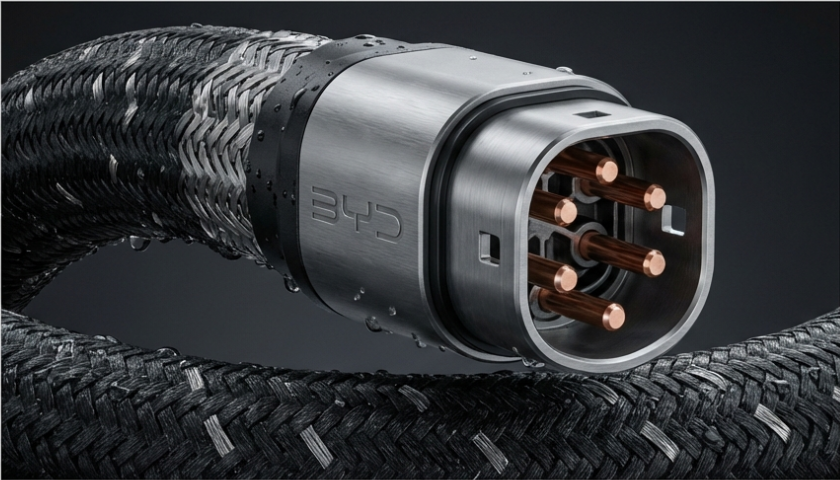
BYD’s flash charging rollout — 4,000-plus stations going into China, capable of adding 400 kilometres of range in five minutes — has been covered mainly as a competitive answer to Tesla’s Supercharger network. That framing might be underselling what is actually being built.
Consider the scale of what BYD’s European growth already represents in energy terms. The 18,242 cars registered in January 2026 alone represent roughly 1.8 gigawatt-hours of battery capacity added to European roads in a single month. Each of those cars is, in effect, a large mobile energy store. The technology to send that stored energy back into the grid — or into a home — is called vehicle-to-grid, or V2G.
In Germany, the regulatory barrier that previously made V2G financially unattractive was removed in 2026 under the Energy Industry Act, which eliminated double grid fees for bidirectional charging. The model is now economically viable in Europe’s largest market.
Octopus Energy has already moved on this. The company launched a V2G product pairing BYD vehicles with a home energy tariff, with vehicle-to-home trials running in the UK. Separately, Octopus launched Bitong Energy — a joint venture with Chinese energy investor PCG Power — focused on trading renewable electricity in China’s electricity spot markets. Two different deals, two different partners, but both pointing in the same direction.
Which leads to the question that European energy companies may want to start taking seriously: if BYD controls the car, and its hardware underpins the energy trading layer, at what point does the car become a secondary part of the business — a way to place energy infrastructure in people’s driveways at scale?
The three biggest regular costs for a European household are energy, car finance, and insurance. Is the infrastructure to consolidate all three under a single roof being built right now? The pieces are there. Whether they connect is the question.
4. Does Owning Your Own Ships Actually Change the Competitive Maths?
The logistics story is unglamorous — and possibly more consequential than it looks
Shipping costs are volatile. A blocked canal, a surge in demand, a vessel shortage — any of these can drive freight rates up sharply. For a company exporting cars across continents this is normally an accepted cost of doing business.
BYD has been systematically removing that exposure. The company built its own fleet of Ro-Ro ships — the large vessels designed to roll cars directly on and off at port. The final ship in the initial fleet, the BYD Jinan, was commissioned in September 2025. The fleet now carries over a million vehicles a year. BYD is expanding it further in 2026, reaching eight to nine vessels.
The question this raises for the competitive landscape is a simple one: when global shipping rates spike, every rival relying on third-party carriers faces a cost increase that either compresses their margin or gets passed to the customer. Does BYD face that same pressure? Increasingly, no.
It’s the same logic running through the charging network and the energy partnerships — every layer BYD controls internally is a layer that external conditions can’t be used to squeeze. Tariffs can target the car at the border. They can’t touch a ship BYD already owns.
Is this a decisive advantage on its own? Probably not. As one piece of a larger pattern of vertical integration, the question becomes harder to dismiss.
What Do These Four Things Have in Common?
None of them show up in a monthly registration table. All of them concern the conditions under which future market decisions will be made — not the decisions that have already happened.
The leasing question is about whether the monthly payment calculation increasingly favours Chinese brands regardless of what the cars themselves are like. The software question is about whether a deal designed to save time might be creating a dependency that only becomes visible later. The energy question is about whether a car company is building toward something that looks less like a car company over time. The shipping question is about whether a cost that is currently shared across the industry is quietly being removed for one player.
None of these are conclusions. The evidence is real, the sources are verified, and the questions are worth asking. What the answers are — that’s the part nobody can confirm yet.