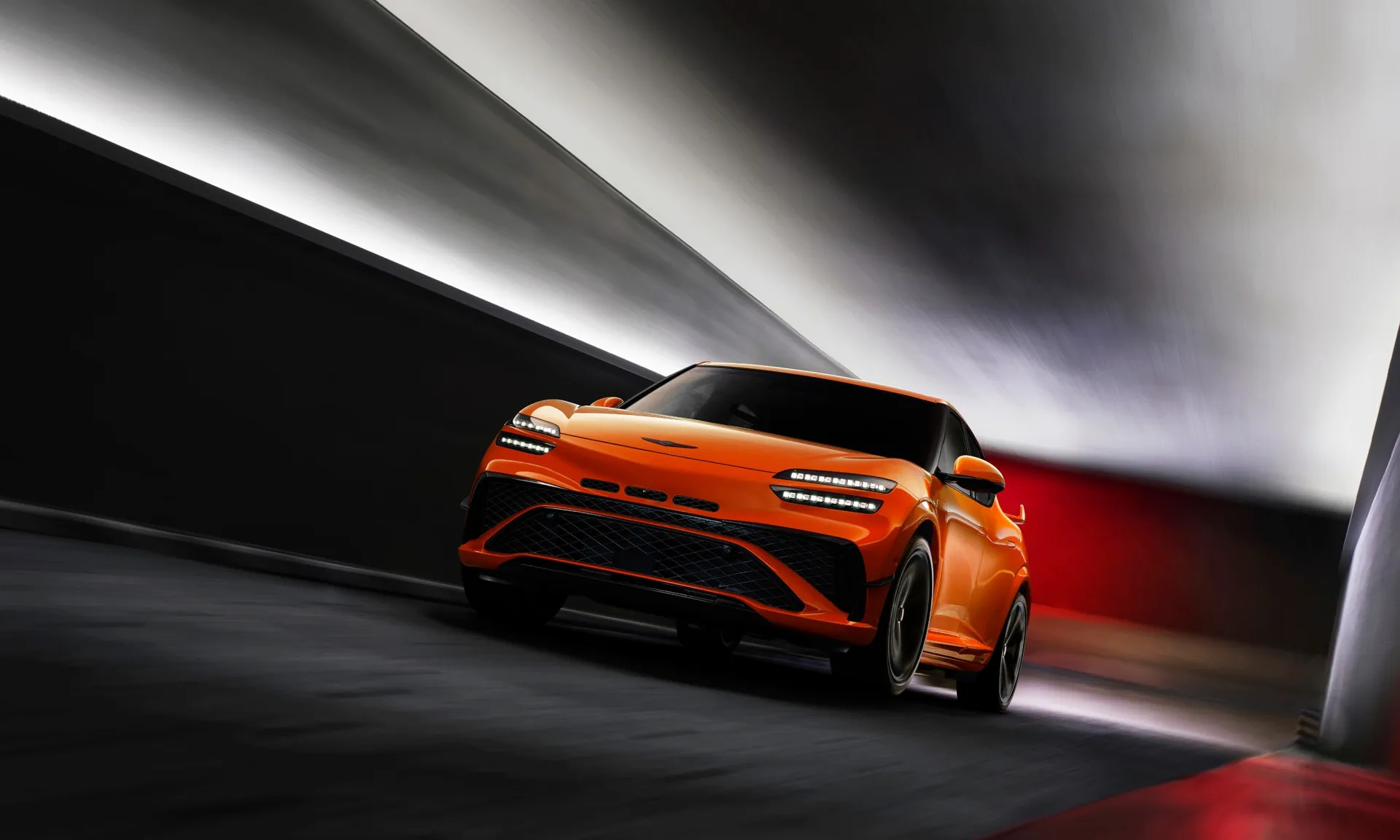

Genesis is bringing its GV60 Magma performance SUV to Europe in 2026, with 641 horsepower, a confirmed 448 km WLTP range, and a 10-to-80 percent charge in 18 minutes. It undercuts the Porsche Macan EV Turbo on power and price. Chinese 900V performance platforms are reaching production the same year.
What Happened
Genesis unveiled the GV60 Magma at Circuit Paul Ricard in France in November 2025 and launched it commercially in South Korea on January 13, 2026. The vehicle is built on an 800V platform with an 84 kWh battery. In standard mode it produces 641 horsepower and 740 Nm of torque. Boost Mode unlocks 650 horsepower and 790 Nm for 15 seconds, extended from the 10-second window in Genesis’s standard GV60. The front and rear motors reach a maximum speed of 20,920 rpm. The car covers 0-100 km/h in 3.4 seconds and 0-200 km/h in 10.9 seconds using Launch Control, with a top speed of 264 km/h. WLTP range is confirmed at 448 km. It charges from 10 to 80 percent in 18 minutes on a 350 kW charger.
The suspension has been recalibrated with Electronic Control Suspension and End-of-Travel control systems for cornering stability and ride comfort. The braking system uses front monoblock calipers with large-diameter discs and rear brakes with high-friction GG-rated materials, optimised for the Magma-exclusive 21-inch forged wheels. A High-Performance Battery Control system manages battery temperature during sustained high-load driving. Five drive modes are offered, including the Magma-exclusive Sprint and GT modes alongside Range, Comfort, and Sport. Drift Mode is included. European pricing has not been confirmed, with estimates placing it above €87,000. European launch is planned for 2026.
What It Means
The 18-minute charge window is the specification that stands up to scrutiny. The Porsche Taycan Turbo, on an equivalent 800V system at comparable peak charging speeds, takes around 22 minutes for the same 10-to-80 percent window. The Magma’s figure is faster and, if replicated in real-world conditions, represents a measurable advantage in everyday use.
The 0-200 km/h figure of 10.9 seconds places the GV60 Magma in territory that, until recently, only combustion-powered performance cars occupied at this price point. The extended Boost Mode window, 15 seconds against 10 in the standard GV60, reflects a specific engineering decision around thermal management. Genesis has improved front and rear motor cooling for more consistent output under sustained load. That is an engineering constraint addressed, not a marketing feature added.
The competitive positioning has two reference points. Against the Porsche Macan EV Turbo at approximately €95,000, the Magma offers more power at a lower estimated price, with comparable charging speed but less brand heritage. Against the Hyundai Ioniq 5 N at approximately €65,000 in the UK, the Magma adds roughly €22,000 of premium intent. Whether European buyers find that premium credible is the central commercial question for the Magma sub-brand.
The GV60 Magma arrives in Europe in the same year that Chinese 900V performance platforms are reaching production in their home market. Whether Genesis’s European brand recognition and the Magma’s confirmed specifications are sufficient to hold its price positioning as that competition approaches is a question 2026 will begin to answer.