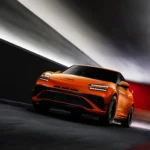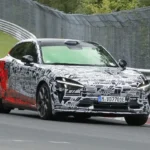
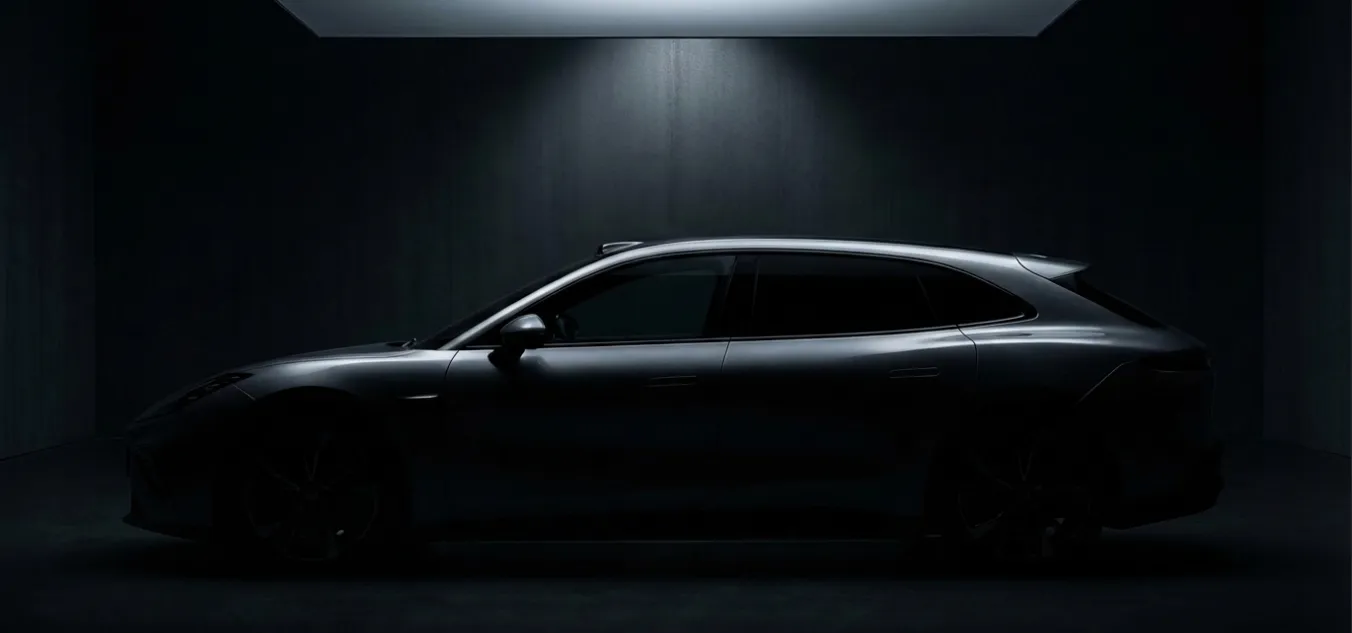

On March 17, 2026, Huawei’s automotive division Qiankun and GAC Group jointly launched Aistaland at the Guangzhou Greater Bay Area Cultural and Sports Center, simultaneously opening blind orders for its first model, the GT7 shooting brake. Deliveries are scheduled for June 2026. The brand name combines “AI” with “Start New Land,” which tells you exactly what Huawei wants you to read into it.
The GT7’s headline specification is a dual-optical-path 896-line LiDAR system, described across multiple Chinese sources as the highest-resolution unit prepared for mass production globally. No current European mass-production model uses a comparable system; the premium segment in Europe relies predominantly on camera-radar fusion. The sensor integrates with Qiankun ADS in an L3-ready architecture and a HarmonyOS cockpit featuring the new Xiao Yi AI agent. The powertrain is tri-motor, built around a CATL Qilin battery on an 800V platform with 6C ultra-fast charging. CLTC range is stated at up to 720 km. The body measures 5,050 mm in length with a 3,000 mm wheelbase, placing it dimensionally against the Porsche Taycan Cross Turismo. The chassis was co-developed with engineers formerly at Aston Martin and McLaren. Pre-sale pricing is indicated at 300,000 to 380,000 yuan.
The structural model here differs from every previous Huawei automotive collaboration. Earlier “jie” brand partnerships were licensing arrangements. Aistaland operates through Huawang Automotive, with Huawei embedding hundreds of personnel in Guangzhou and implementing its IPD and IPMS product development processes directly alongside GAC’s manufacturing systems, which carry validation across nearly 30 million vehicle owners. A three-year product plan is confirmed, including a large SUV later in 2026. Distribution launches through a “1+N” dealer model across 70 Chinese cities, with showrooms opening in May.
The immediate market is domestic. The GT7 enters against the Zeekr 001 and NIO ET5 Touring. No European market entry has been announced, and GAC faces a 30.7% combined tariff on China-built EVs exported to Europe. On L3, the EU regulatory picture shifted on January 1, 2026, when UN Regulation No. 157 amendments established a highway framework up to 130 km/h, though no Chinese automaker has completed type-approval for a specific implementation.
Whether these technologies translate into European market presence may depend on regulatory evolution, trade policy, and the strategic choices of the companies involved in the coming years.