
Takeaways:
- Leapmotor’s Spanish production line removes the EU tariff burden entirely and qualifies the B10 as a European-manufactured vehicle — a regulatory and commercial advantage no European OEM can currently match at that price point.
- The FAW stake is modest at 5% and was structured to preserve founder control, but the accompanying PHEV co-development agreement with Qixin Power is worth watching at a time when European policymakers are paying close attention to ties between Chinese OEMs and state-owned enterprises.
Leapmotor opened its first overseas design centre in Munich and is producing prototypes in Spain, with commercial production starting October 2026. A Stellantis partnership, a Chinese state-owned minority shareholder, and a Spain-built SUV priced below European rivals. The category question is genuinely open.
What Happened: Leapmotor Establishes European R&D and Begins Local Production
According to CnEVPost, Leapmotor officially opened its first overseas innovation centre in Schwabing-Freimann, Munich on March 21, 2026. The facility will lead design iteration and conceptual development for future models, giving Leapmotor a globalized design network across Munich, Hangzhou, and Shanghai. The company described the move as a strategic shift from exporting products to exporting design.
The Munich opening follows a significant financial turnaround. Leapmotor posted a net income of 540 million yuan in 2025, its first full-year profit, on revenue of 64.73 billion yuan, a 101.3% increase year-on-year. The company delivered 596,555 vehicles in 2025, doubling output for the second consecutive year, and has set a target of over one million deliveries in 2026. European exports reached 67,052 units in 2025, ranking first among Chinese EV startups. By end of February 2026, cumulative exports exceeded 100,000 units, with Leapmotor placing top-three among Chinese BEV brands in Europe.
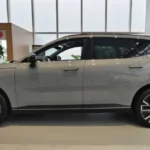
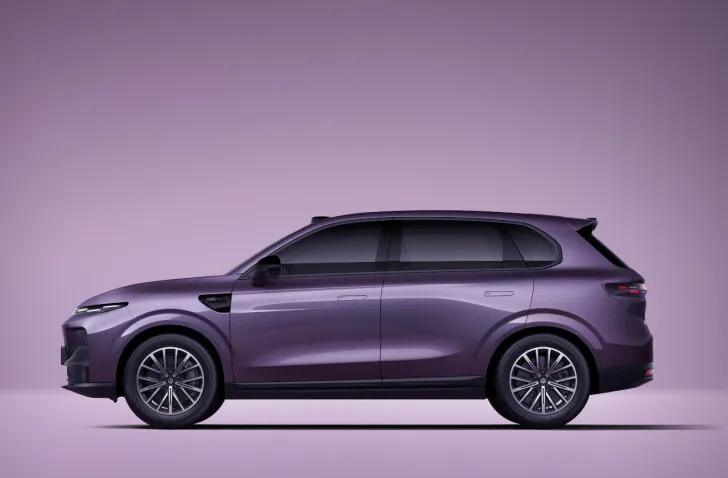
On production, Leapmotor’s CKD assembly project in Zaragoza, Spain has produced its first prototype vehicle for the B10 compact SUV. Commercial production is targeted for October 2026. A smaller model, the B05, begins trial production in June 2026 and enters commercial local production in 2027.
According to ChinaEVHome, in December 2025, China FAW Group acquired a 5% stake in Leapmotor through a private placement raising approximately $533 million. The stake is modest and was structured to preserve founder control. FAW’s subsidiary Qixin Power also signed a cooperation agreement covering co-development and production of PHEVs and EREVs, which is worth noting given that European policymakers are paying close attention to ties between Chinese OEMs and state-owned enterprises.
What It Means: The Localisation Playbook Is Now Operational
The Zaragoza production line changes Leapmotor’s regulatory position entirely. Spain-assembled vehicles carry no EU anti-subsidy duties and qualify as EU-manufactured for subsidy eligibility purposes. The B10 currently starts at €29,990 in Germany as an import. A Spain-built B10 at a comparable price would sit below the Skoda Elroq and well under the VW ID.4, with no tariff burden and access to domestic incentive programmes in applicable markets. No European OEM currently matches that combination of price and local-manufacture status in this segment.
Leapmotor has built its European commercial presence largely on its Stellantis partnership, which provides distribution across more than 30 markets. The PHEV co-development angle with Qixin Power is also worth watching: if Chinese brands are already accelerating hybrid development partly to navigate EU tariff structures that target pure EVs, a dedicated PHEV partnership between FAW and Leapmotor points in that same direction.
By the end of 2026, Leapmotor will have a design centre in Munich, an assembly line in Spain, Stellantis distribution across more than 30 markets, and a Chinese state-owned enterprise as a minority shareholder. Whether that combination reads as a European manufacturer, a Chinese brand, or something the industry does not yet have a clean category for is a question regulators, competitors, and buyers will have to answer for themselves.