
Takeaways:
- The XC70 will arrive in Europe built in Taizhou, China, no European production is planned. It faces only the standard 10% import duty as a PHEV, the same as every other Chinese-built PHEV, not because of any special treatment but because the EU’s countervailing surcharge targets BEVs specifically.
- Volvo’s brand equity may do what Chinese brands have been unable to do themselves: make a China-built, Geely-platformed car feel European to European buyers. Whether that holds when EU pricing is announced is the question that will define this launch.
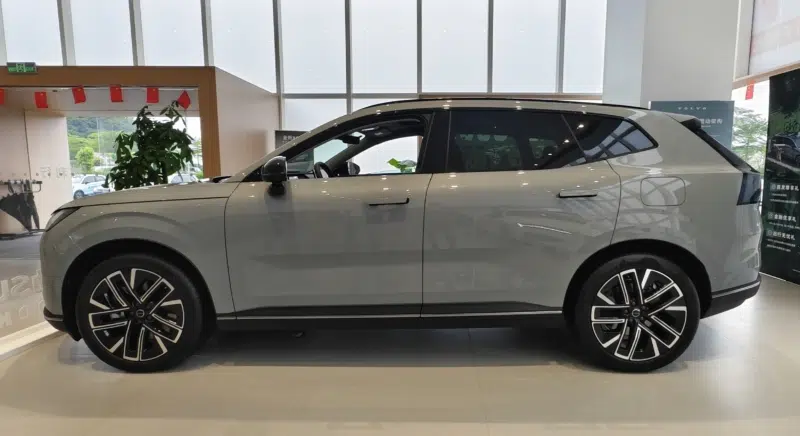
Volvo’s XC70 PHEV is built in China on a Geely platform, confirmed for Europe, and faces the same 10% import duty as every other Chinese-built PHEV. The specs are strong. The real question is whether a Swedish badge changes how European buyers think about a Chinese car.
What Happened: Volvo’s XC70 PHEV Is Heading to Europe From a Factory in Taizhou
According to CarNewsChina, Volvo has road-tested the XC70 PHEV in China and confirmed its planned launch in Europe and over 70 global markets. The car is built in Taizhou, China, on Geely’s SMA (Scalable Modular Architecture) hybrid platform, developed jointly by Geely and Volvo. Volvo is owned by Geely. No European production is planned: according to Volvo’s Chief Strategy and Product Officer Michael Fleiss, speaking at the Volvo Cars Strategy Update in November 2025, “this car was made for China with China technology” and will need time to be made ready for Europe before it arrives.
The AWD Extended Range trim produces 340kW (456hp) from a 1.5T engine paired with three electric motors, covers 212km on electricity alone under China’s CLTC test cycle, and charges from 0-80% in 23 minutes at 87kW. Combined range with a full tank exceeds 1,200km. The car also supports V2L, meaning it can export up to 6kW to power external devices. China pricing runs from ¥269,900 to ¥349,900, roughly €33,000 to €42,800 at current exchange rates. EU pricing and a launch date have not been announced.
One quality note: Geely’s subsidiary has issued a recall of 14,768 AWD XC70 units in China for a left rear half-shaft defect. First-generation platform issues are common and typically resolved, but European buyers and dealers will be watching.
What It Means: A European Badge on a Chinese PHEV Strategy
Like BYD, MG, and Chery before it, the XC70 will enter Europe as a plug-in hybrid built in China. PHEVs face only the standard 10% EU import duty. The EU’s countervailing surcharge — 18.8% for Geely-built BEVs — applies specifically to battery electric vehicles. The XC70 avoids that surcharge not because it is a Volvo, but because it is a PHEV. Every Chinese-built PHEV imported into Europe is on the same 10% footing.
What is different here is the badge. When BYD or Chery bring PHEVs to Europe, buyers know they are considering a Chinese car. When the XC70 arrives in a Volvo dealership, most European buyers will not make that association. Volvo has decades of safety reputation in European driveways, and that brand equity effectively neutralises the consumer perception barrier that other Chinese manufacturers have been working to overcome.
The commercial momentum is real. According to Volvo CFO Fredrik Hansson on the Q4 2025 earnings call, “We have the XC70 as a big product in China, which is part of the reason why we grew 2% in Q4, and the market was down 12%.” Volvo has clear incentive to bring that momentum to Europe.
If the XC70 succeeds in European markets, it will test a thesis that goes beyond this one car: whether Geely-Volvo engineering, under a trusted European nameplate, reaches buyers that Chinese-branded products still cannot. The answer will matter to every European-owned, China-manufactured product that follows it.
Volvo’s XC70 Is Built in China on a Geely Platform. Does That Still Matter to European Buyers?