
Nio has produced 550,000 in-house chips and is now selling them to other automakers. BYD applied the same vertical integration logic to batteries. European OEMs source their entire ADAS computing stack from external suppliers. The pattern is the same. The sector-level implications may be too.
What Happened
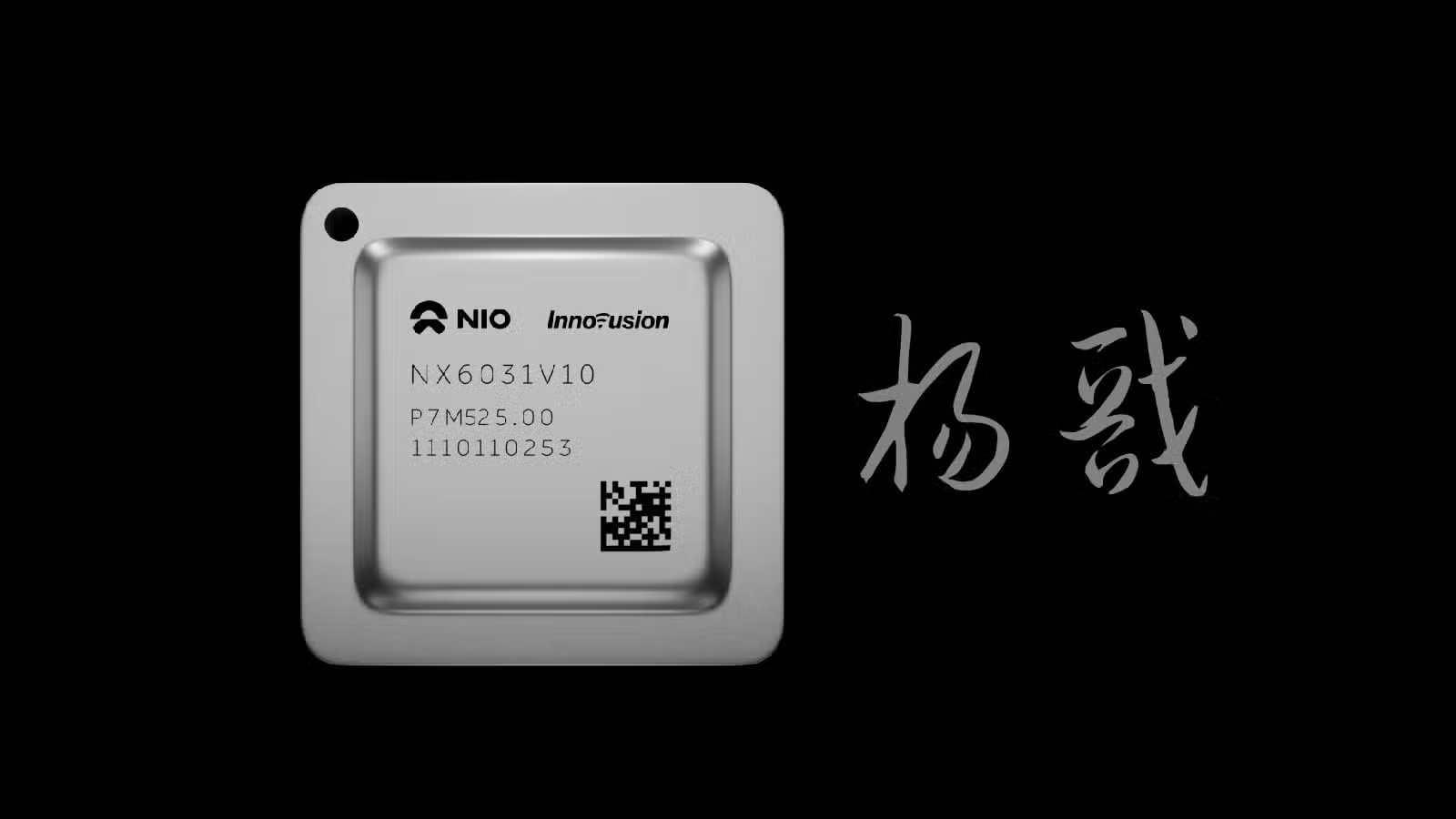
At a semiconductor summit in Shanghai, Nio CEO William Li confirmed that cumulative in-house chip production has exceeded 550,000 units. The figure covers two products: the Yangjian LiDAR master control chip, which has passed 400,000 units since deployment began in April 2024, and the Shenji NX9031 smart driving SoC, built on a 5nm process, with over 150,000 units produced since its first deployment in the ET9 sedan in March 2025. The Yangjian chip saves Nio “hundreds of yuan” per vehicle. Nio’s chip subsidiary Shenji raised 2.2 billion yuan in its first financing round in February 2026, reaching a valuation of approximately 10 billion yuan. The M97 chip, co-developed with partner Axera, is now being pitched to third-party automakers. Nio is targeting 35 to 40 percent domestic semiconductor sourcing by 2027 and is capping its total chip specifications at 400 across its entire vehicle lineup to achieve scale efficiency.
What It Means
The per-vehicle savings from the Yangjian chip are modest today. That is not the signal. The signal is the external sales pitch on the M97.
When Nio begins selling chips to other automakers, a cost-reduction initiative becomes a revenue line and a sector-wide cost lever. If the M97 finds customers among other Chinese OEMs, the semiconductor cost advantages Nio has built do not stay within one brand. They distribute across the sector. That is a structurally different outcome than a single manufacturer optimising its own supply chain.
The pattern has a precedent. BYD applied vertical integration to batteries, reduced its own unit costs at scale, and the cost gap between Chinese and European EVs widened at the chemistry level. Nio is applying the same logic to semiconductors. European OEMs currently source their ADAS computing stacks entirely from external suppliers including Qualcomm, Mobileye, Nvidia, and Renesas. That creates both cost dependency and supply chain exposure that no European policy instrument currently addresses at the silicon level.
One counterweight is material. Nio posted significant losses through 2025, and Shenji’s 2.2 billion yuan February financing round, while substantial, does not resolve the question of whether the semiconductor strategy generates returns before the company’s cash position becomes critical. The model is directionally coherent. Its financial durability is not yet proven.
Whether Nio’s semiconductor platform approach finds sufficient external customers to become a sector infrastructure move, and how quickly the cost divergence between Chinese and European ADAS stacks widens as a result, are questions the 550,000-unit milestone raises without resolving.