
Takeaways:
- VW Group’s decision to retain VW and Audi in China while exiting Skoda is an explicit judgement that technology-differentiated and premium brands can survive what mid-tier cost-performance brands cannot.
- The competitive dynamic that displaced Skoda in China in seven years, local brands with credible EV products at structurally lower costs, is now active in Europe.
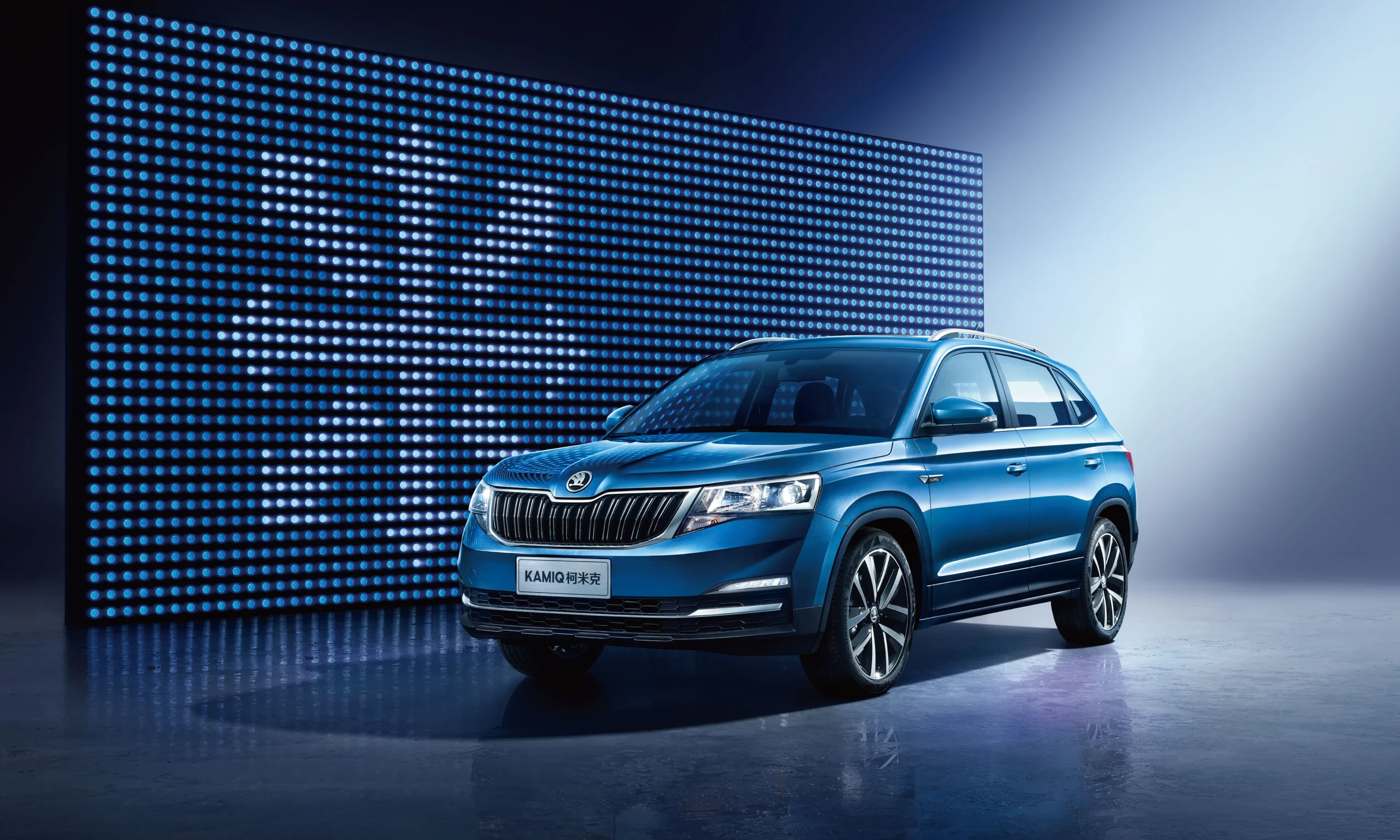
Skoda confirmed it will leave China by mid-2026 after sales collapsed 96% from a 2018 peak of 341,000 units to 15,000 in 2025. VW Group is simultaneously doubling down in China with VW and Audi. The brand that exits and the brands that stay tell you exactly what VW thinks survives the current competitive environment.
Skoda Confirms China Withdrawal by Mid-2026
Skoda confirmed in a March 25 statement that it will withdraw from the Chinese market by mid-2026. According to Reuters, the company said it “will continue to sell Skoda models in the Chinese market in collaboration with a regional partner until mid-2026,” with after-sales services continuing for existing customers after that point.
China was Skoda’s largest single market globally for most of the 2010s. Sales peaked at 341,000 vehicles in 2018, at which point roughly one in every four Skodas sold worldwide went to a Chinese buyer. The collapse that followed was steady and unrecoverable: 173,000 in 2020, 71,200 in 2021, 44,600 in 2022, 22,800 in 2023, 17,500 in 2024, and 15,000 in 2025. That last figure represents a 96% decline from the 2018 peak, achieved in seven years.
According to Carscoops, Skoda’s exit comes despite the brand having launched the Elroq electric SUV and working on two new models, the Epiq and Peaq. The assessment appears to be that competing on Chinese home turf is no longer worth the investment. Skoda said its strategic focus shifts to India, where sales grew 96% in 2025 making it the brand’s fourth-largest market, and Southeast Asia.
The contrast within VW Group is deliberate. The VW-Xpeng jointly developed ID.UNYX 08 has entered mass production in China. Audi has begun pre-sales for the A6L e-tron. Both moves were communicated in the same week as the Skoda exit. VW Group is not retreating from China, it is making an explicit judgement about which of its brands can survive there.
What Skoda’s Exit Raises for European Markets
One reading of the Skoda trajectory is specific to China: a mid-tier brand without a credible EV response, in a market that moved faster than any Western OEM anticipated. Another reading is more uncomfortable. Skoda was not a weak brand entering a foreign market. It was, according to Motor1, Europe’s third best-selling car brand in 2025 with global sales growing 12.7% to 1,043,900 units, its best result in six years. The brand is commercially healthy everywhere except China.
That distinction raises a question worth sitting with: the same competitive dynamic that eliminated Skoda’s China position in seven years, local brands with superior EV products at lower prices, is the dynamic that Chinese brands are now applying in Europe. BYD reached close to 2% European market share in February 2026 while absorbing a 27% import tariff. Leapmotor’s Spain-built B10 enters European production without any tariff in October 2026.
The speed of displacement in China had no Western precedent. Whether the European market has structural differences that slow that process, or whether European mid-tier brands are looking at a compressed version of the same curve, is a question Skoda’s exit puts directly on the table.