
If you have been following the electric vehicle story over the past decade, you have witnessed three distinct acts. First came the proof of concept—expensive, fragile, and rare. Then came the era of the spec sheet war, where victory was measured in extra kilometres of range and fractions of a second shaved off 0-to-100 times. But if the first weeks of 2026 have taught us anything, it is that the script has flipped again. The industry has stopped trying to impress us with what it can do, and started proving what it can sustain.
This is the year the gimmicks died. And in their place, something far more interesting emerged: a global, high-stakes competition over durability, safety, access, and chemistry. It is no longer about who builds the flashiest toy. It is about who builds the most trustworthy tool—and who can put it in the hands of the most people.
The Battery Revolution You Won’t See Coming
For years, the phrase “solid-state battery” has lived in the same category as flying cars and fusion power—a breakthrough that is always five years away, never quite ready for the factory floor. That timeline just collapsed. In early January, Hongqi, the premium arm of China’s FAW Group, quietly announced that its first all-solid-state battery packs had successfully rolled off a trial production line .
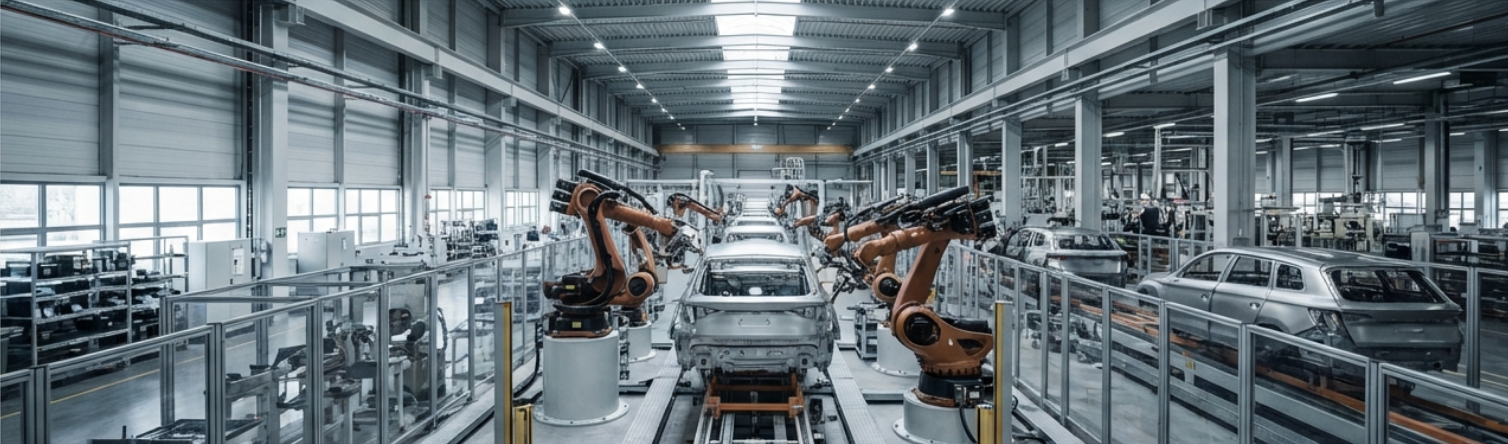
Let us be precise about what this means. It does not mean you can buy one tomorrow. It means the leap from the laboratory to the industrial assembly line—the hardest part of any technological revolution—has officially begun. Hongqi’s achievement is not about chemistry; it is about manufacturing discipline. These cells require production environments so dry that the dew point must be held at minus seventy degrees Celsius. That is not an adjustment. It is a complete reimagining of what a car factory looks like .
Why go to such extremes? Because the payoff is not just a longer range. It is a battery that could outlive the car itself. Toyota, which is racing alongside Chinese firms toward commercialisation, has begun speaking openly about a future where a single battery pack is removed from a scrapped vehicle and installed in a second, then a third, spanning four decades of service . The logic here is quietly profound: we have spent years worrying about whether EVs can go far enough. Soon, the question will be whether the rest of the car can keep up with the battery.
Sodium: The Unsexy Chemistry That Changes Everything
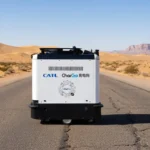
While solid-state grabs the headlines, another battery story unfolded in late January that may ultimately touch far more lives. CATL, the world’s largest battery manufacturer, launched the first mass-produced sodium-ion battery purpose-built for commercial vehicles .
If your eyes glaze over at the mention of battery chemistry, consider this: sodium is not lithium. It is abundant, cheap, and found almost everywhere. It does not require conflict-ridden supply chains or deep-sea mining. And crucially, unlike lithium-based cells that become sluggish and reluctant in freezing temperatures, sodium-ion batteries retain ninety percent of their capacity at minus forty degrees Celsius .
This is not an incremental improvement. It is a geographic liberation. Until now, the electric revolution has been largely a story for temperate climates. Northern Europe, Canada, the high-altitude cities of South America—these places have always been told that EVs are coming, just not quite yet. Sodium-ion changes that calculation. It will not power a thousand-kilometre luxury sedan; its energy density is too low for that. But it will power the delivery vans, the short-haul trucks, the urban runabouts that operate in the places where winter is not a season but a way of life .
CATL’s executives have begun describing the future as a “dual-star” system, with lithium and sodium operating side by side, each doing what it does best . It is the first credible, industrial-scale answer to the question that has dogged EVs since their inception: what about the cold?
The 900V Leap and the End of Charging Anxiety
At the same time, the charging infrastructure narrative took a decisive turn. Zeekr, Geely’s premium EV brand, confirmed that its updated 007 model will debut with a 900-volt electrical architecture in the second quarter of this year .
To understand why this matters, forget the voltage figure itself. Think instead about what it enables: a ten-minute charge that adds hundreds of kilometres of range. The current generation of fast-charging vehicles operates at 400 or 800 volts. Moving to 900 is not about keeping score; it is about making the act of charging feel less like a chore and more like a brief pause. Geely’s new G-ASD driving system, powered by a single Nvidia Thor chip capable of 700 trillion operations per second, is designed to fuse camera, radar, and navigation data in real time—not for some distant robotaxi fantasy, but to make your commute smoother next Tuesday .
The commentary from enthusiasts has focused on the horsepower and the chip specs. But the strategic signal is different. By moving its mainstream premium model to 900 volts, Zeekr has declared that ultra-fast charging is no longer a halo feature reserved for six-figure hypercars. It is now the baseline expectation for a thirty-thousand-euro vehicle. And once a baseline is set, it cannot be unset.
The LiDAR Democratisation
If there was a single moment that defined the shifting centre of gravity in this industry, it came on January 11, when Chinese regulators certified updated versions of BYD’s Seagull and Dolphin—the company’s smallest, most affordable city cars—equipped with optional LiDAR and Nvidia’s Orin computing platform .
Let us translate that into non-technical language. LiDAR is the spinning, laser-firing sensor that has, until very recently, been the exclusive emblem of premium autonomy. It is the expensive eye that tells a car exactly where it is in the world. Putting it on a Seagull—a vehicle that starts at under ten thousand euros in China—is not a trim level upgrade. It is a declaration of war on the old pricing ladder.
The system, branded as BYD’s “God’s Eye,” uses a RoboSense LiDAR capable of detecting objects up to 350 metres away . For a driver navigating dense urban traffic, that margin translates into safety decisions made seconds earlier. For the industry, it translates into a brutal new reality: if the world’s largest EV manufacturer can offer highway-capable autonomous driving assistance on its cheapest models, every other automaker must now answer a difficult question. Why are you charging extra for what BYD treats as a volume feature?
When German Luxury Met Chinese Software
The week of January 12 delivered a statistic that would have been unthinkable five years ago. The Maextro S800, a luxury sedan co-developed by Huawei and JAC, outsold the combined December total of the Porsche Panamera, BMW 7 Series, and Mercedes-Maybach S-Class in China .
Not individually. Combined. Four thousand three hundred seventy-six units against four thousand one hundred forty.
Let that sink in. A sedan wearing a badge that did not exist two years ago, powered by Huawei’s Harmony cockpit and advanced driving systems, outsold three of the most established names in German automotive engineering on their own imported turf. The Panamera, the 7 Series, the Maybach—these are not niche vehicles. They are the flagships, the embodiments of a century of refinement. And they were beaten not by superior leather or a quieter cabin, but by a superior digital ecosystem .
The lesson here is uncomfortable for legacy automakers. In the world’s largest car market, prestige is no longer conferred by heritage alone. It is earned through seamless integration—the car that talks to your phone, your home, your calendar, that updates itself while you sleep. The Maextro S800 did not win on horsepower; it won because it is, first and foremost, a sophisticated electronic device that happens to have wheels.
The Safety Pivot: When Cool Design Meets Reality
As if to underscore that the era of unchecked aesthetics is over, China’s Ministry of Industry and Information Technology issued a new mandatory safety standard on February 2 that effectively bans the hidden door handles that have become a signature of modern EV design .
The logic is brutal and simple. In the aftermath of a collision, when the vehicle’s electrical system may be compromised, a handle that requires power to present itself can become a death trap. First responders cannot pry open what they cannot grip. Bystanders cannot rescue what they cannot reach. The new regulation, effective January 2027, mandates that every passenger car sold in China must have mechanically operable handles on both the interior and exterior, functional even after battery thermal runaway or airbag deployment .
This is not a minor styling tweak. It is a regulatory rebuke to the notion that form should ever triumph over function in a safety-critical system. Tesla pioneered the flush handle; nearly every EV maker followed. Now, because China is the world’s largest automotive market and automakers prefer global platforms to regional variants, this standard will effectively become global law. What Beijing regulates today, Berlin and Detroit manufacture tomorrow.
The Supply Chain Reckoning
Amid all the technological triumph, a sobering counter-narrative emerged. Volvo issued a global recall of 33,777 EX30 units due to battery overheating risks, traced to cells produced by a Geely-Sunwoda joint venture . The ensuing litigation—Geely’s Viridi subsidiary is seeking 2.31 billion yuan in damages—exposed the fragility that lurks beneath the surface of even the most ambitious EV programmes.
Sunwoda’s chairman insisted his company was not the direct supplier, that the cells were delivered to Volvo’s system integrator, that the equity stake was only thirty percent . But to the consumer, these distinctions are invisible. What registers is that a vehicle built by a brand synonymous with safety caught fire. The damage to trust is not measured in yuan.
This is the other face of vertical integration. When you control your own battery supply, you control your own destiny. When you do not, you are exposed. The EX30 recall will be studied in boardrooms for years as a case study in the hidden costs of procurement optimisation.
The New Trade Reality: Competing on Tech, Not Price
Finally, a structural shift in the global competitive landscape took effect in mid-January. After more than a year of negotiations, the European Union and China agreed to replace punitive anti-subsidy tariffs on Chinese-made EVs with a “price commitment” mechanism .
Translated into plain English: Chinese exporters can avoid tariffs of up to thirty-five percent by agreeing not to undercut European domestic prices. The era of the nine-thousand-euro Chinese city car flooding into Rotterdam is over before it truly began.
But this is not a retreat. It is an upgrade. By removing the option to compete solely on cost, the agreement forces Chinese automakers to compete on technology, feature content, and brand value . The minimum price floor becomes a quality floor. The companies that succeed in Europe from this point forward will not be those with the leanest cost structure, but those with the most compelling product story.
This is precisely the kind of competition that legacy European automakers least welcome. They know how to defend against cheaper alternatives. They are far less certain how to defend against alternatives that are equally expensive but technologically superior.
What Comes Next
If the first month of 2026 is any indication, the automotive industry has permanently exited the era of speculation and entered the era of delivery. Solid-state batteries are no longer a theoretical promise but a manufacturing problem to be solved. Sodium-ion is no longer a laboratory curiosity but a production reality. Advanced driver assistance is no longer a premium luxury but a volume option. And the competitive hierarchy, decades in the making, has been revealed as startlingly fragile.
The companies that thrive in this new landscape will share a common trait: they treat the car not as a collection of mechanical parts wrapped in styling, but as an integrated technological system that improves over time. They understand that the battery is not a commodity to be purchased but a strategic asset to be mastered. They accept that safety cannot be optional and that convenience cannot be conditional.
The gimmick phase is over. The grown-up phase has begun. And it is moving far faster than anyone predicted.