
Takeaways
- The refreshed EQS 450+ achieves 926 km WLTP range and 350 kW DC charging, adding 320 km in 10 minutes, using a 122 kWh battery with silicon‑oxide‑graphite anodes.
- Steer‑by‑wire technology, a 10‑degree rear steering angle, a two‑speed transmission, and 385 kW regenerative braking debut on the EQS, with orders starting at €94,403 in Germany.
Mercedes EQS Goes 800V: 926 km Range and 350 kW Charging Lead Luxury EV Response
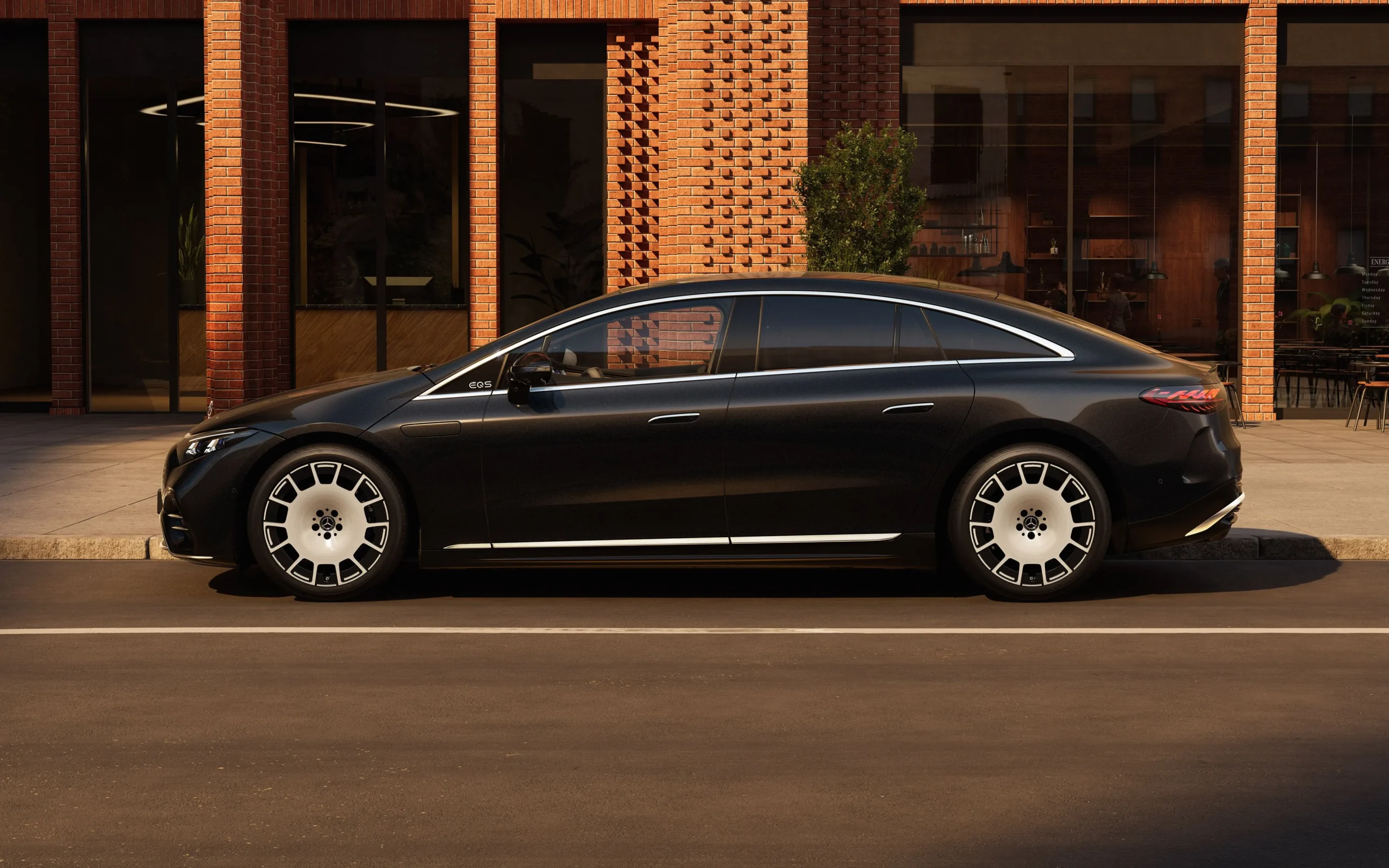
Mercedes-Benz unveiled a major mid‑cycle update to the EQS sedan on 14 April 2026, moving the flagship electric car to an 800‑volt electrical architecture. The single‑motor EQS 450+ achieves a WLTP range of 926 km, a 13% improvement over the outgoing model, and now supports DC fast charging at up to 350 kW.
According to Mercedes, a 10‑minute charge at an 800‑volt station adds 320 km of WLTP range, while the battery intelligently splits into two virtual halves at 400‑volt chargers to maintain a peak of 175 kW. The battery pack grows from 118 kWh to 122 kWh of usable capacity by switching to a silicon‑oxide‑graphite composite anode chemistry that increases energy density without expanding the pack’s physical size.
Steer‑by‑Wire and Two‑Speed Transmission Debut
The refreshed EQS introduces steer‑by‑wire technology, a first for any German automaker in a production car, with an optional yoke‑style steering wheel that requires only 170 degrees of total rotation. When the steer‑by‑wire option is selected, the rear‑wheel steering angle increases from 4.5 degrees to 10 degrees, improving low‑speed manoeuvrability.
A two‑speed transmission on the rear axle combines a short first gear for launch performance with a long second gear optimised for highway efficiency. Regenerative braking power is increased to 385 kW, a 33% improvement, which Mercedes says handles virtually all everyday deceleration without using the friction brakes. Orders open in Germany starting at €94,403 for the entry‑level EQS 400, which has a 112 kWh battery and 817 km WLTP range.
Competitive Context and Market Positioning
The 800‑volt upgrade brings the EQS into direct competition with the Porsche Taycan Turbo S (320 kW peak charging) and Chinese luxury rivals such as the Nio ET9 and the BYD Denza Z9 GT, which launched in Europe from 101,000 euros on 13 April 2026. The EQS is manufactured at Sindelfingen, Germany, and carries no EU import duty. Its WLTP range exceeds every Chinese luxury EV currently confirmed for European sale.
The open question is whether the 800‑volt upgrade and 926 km range make the EQS a credible answer to the Nio ET9 and Denza Z9 GT in the European luxury market, or whether the car‘s polarising aerodynamic shape remains the single biggest commercial limitation that technical leadership alone cannot overcome.