
Takeaways
- Renault will cut 1,600 to 2,400 engineering positions over two years while protecting its Shanghai Ampere China Development Center, which will develop a Dacia A‑segment EV in just 16 months.
- CEO François Provost has publicly stated that Renault must mirror Chinese automakers on innovation, cost and speed, with software development costs for Chinese rivals estimated at one fifth of Renault’s.
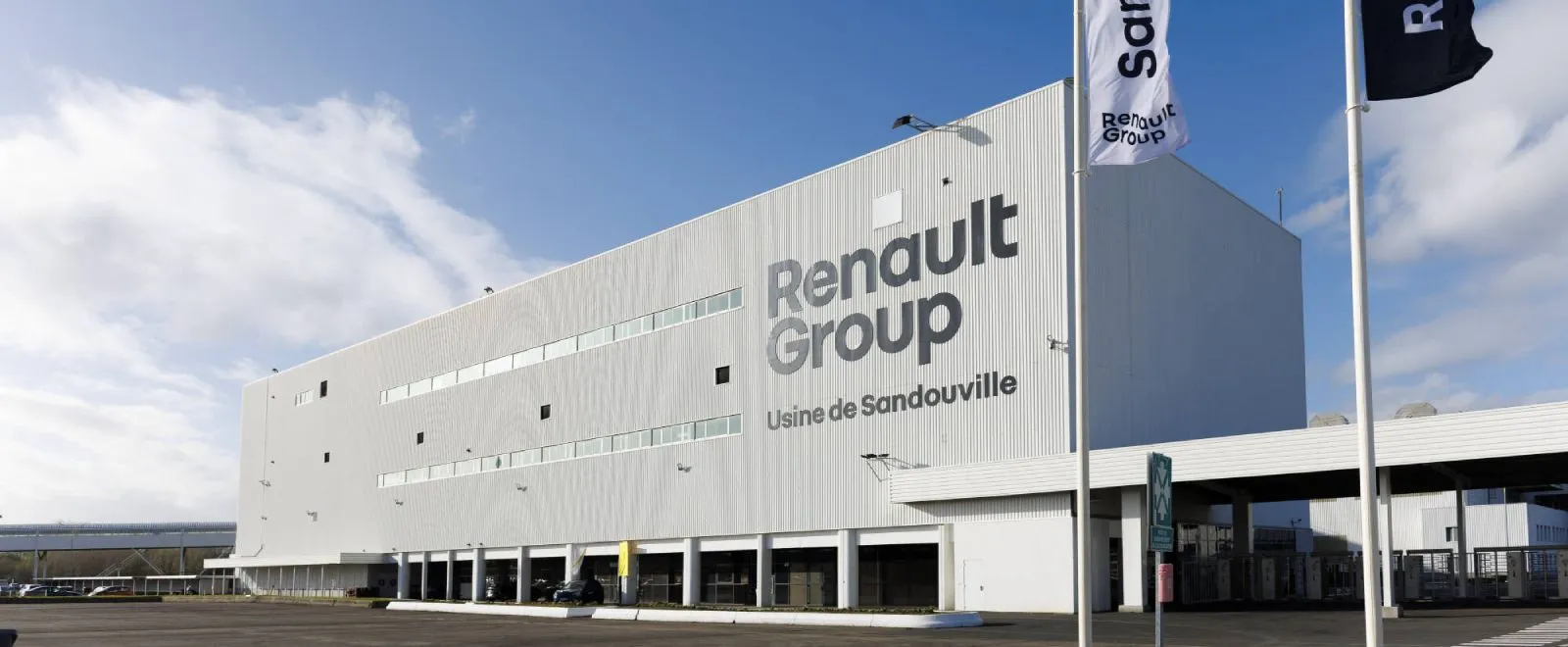
French automaker Renault will cut 15% to 20% of its global engineering workforce over the next two years, a reduction of between 1,600 and 2,400 positions from a current pool of 11,000 to 12,000 engineers worldwide.
Cuts, confirmed on 14 April 2026, will affect engineering centres in France, Brazil, India, Morocco, Romania, South Korea, Spain and Turkey, according to a company spokeswoman.
No forced redundancies are planned, with departures expected through redeployment, skill upgrades and early retirement.
Development Cycles Cut to 24 Months with Chinese Methods
Restructuring is the operational backbone of CEO François Provost’s “FutuReady” strategic plan, unveiled in March 2026, which targets 36 new models within five years on development cycles of just 24 months. Traditional European automakers have typically required far longer timelines while Provost has publicly stated that Renault must mirror Chinese automakers’ methods on innovation, cost and speed.
Internally, he has noted that software-defined vehicle development costing Renault approximately €1.5 billion may cost Chinese competitors roughly one fifth of that and can be completed in less than six months instead of two years.
Twingo E-Tech as Proof of Concept
Renault has already demonstrated the viability of this approach. The new Twingo E-Tech was developed in just 21 months following collaboration with Chinese engineers at the company’s research and development centre in China. The vehicle is scheduled for European launch in 2026, priced below €20,000.
Shanghai Ampere China Development Center Protected
Shanghai Ampere China Development Center (ACDC), established in 2024, is exempt from the engineering cuts. Renault Chief Technology Officer Philippe Brunet has described ACDC as “the heart of this collaboration,” designed to plug directly into China’s fast-moving EV ecosystem, accelerate time to market, scout for innovation and build strategic partnerships.
The centre performs three core functions: integrating China’s leading supply chain resources in electrification, batteries and connectivity; providing strategic recommendations based on Chinese market and technology trends; and leveraging AI, autonomous driving and robotics for product development. ACDC will next develop a Dacia A‑segment EV in just 16 months following concept freeze.
European Competitiveness Question
The open question is whether the Twingo E-Tech’s market performance in 2026 validates Renault’s 24‑month development methodology or reveals that speed came at a cost in European‑market‑specific refinement that Chinese engineers in Shanghai could not replicate.